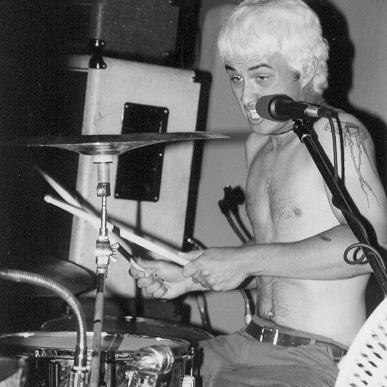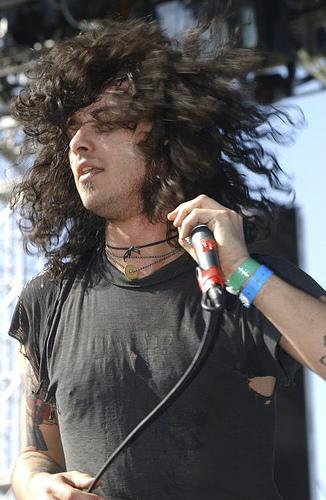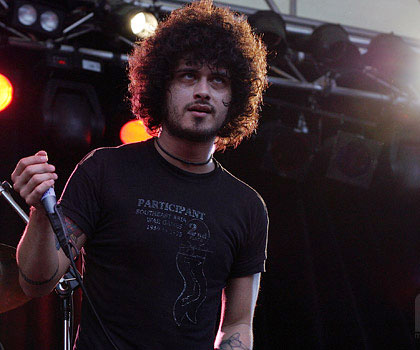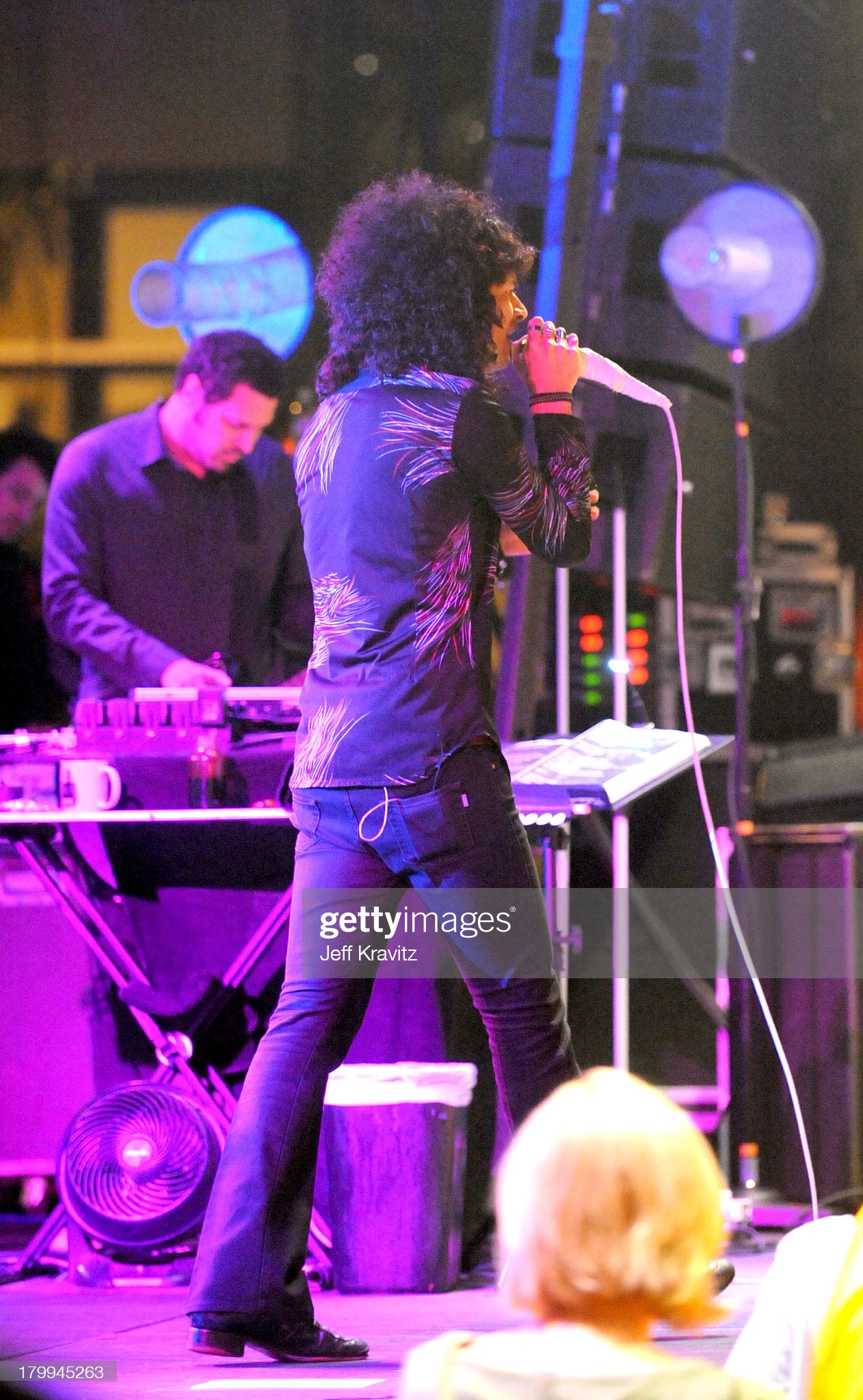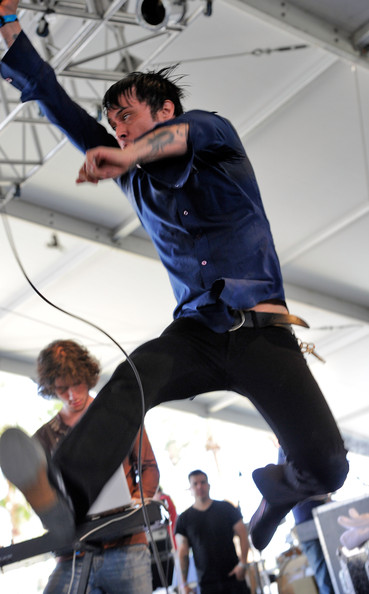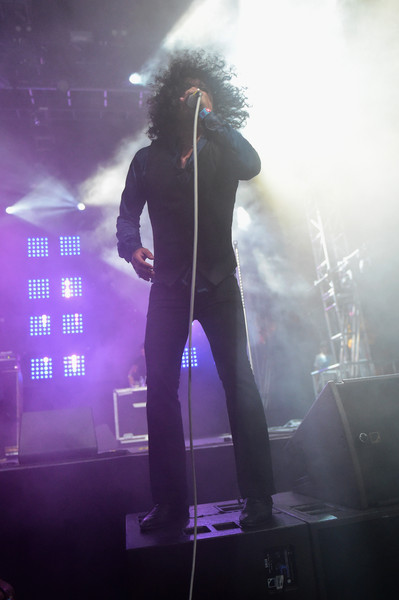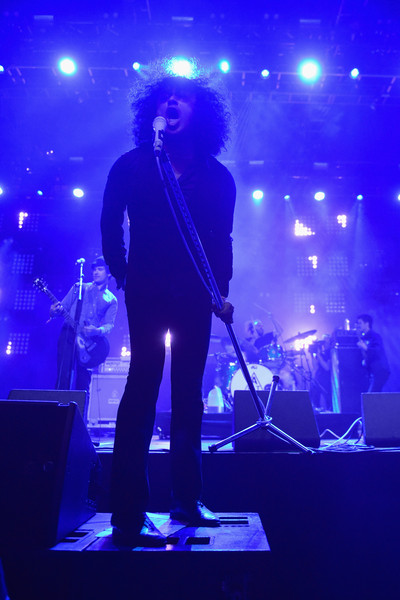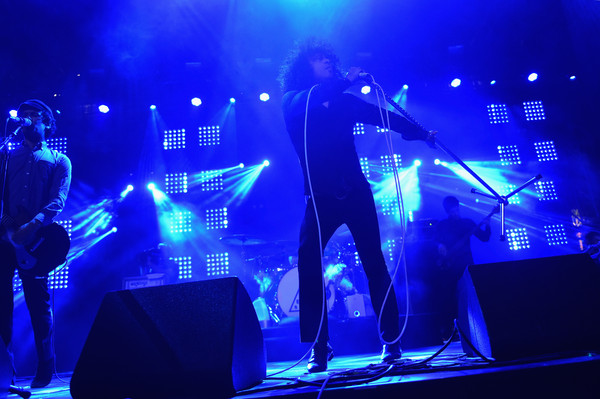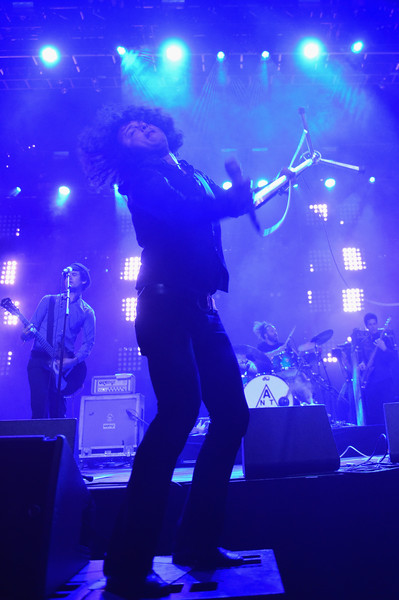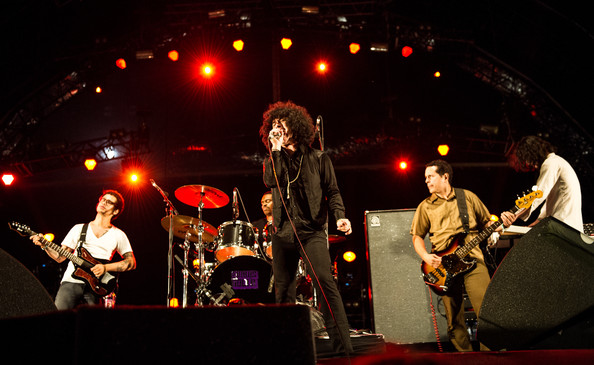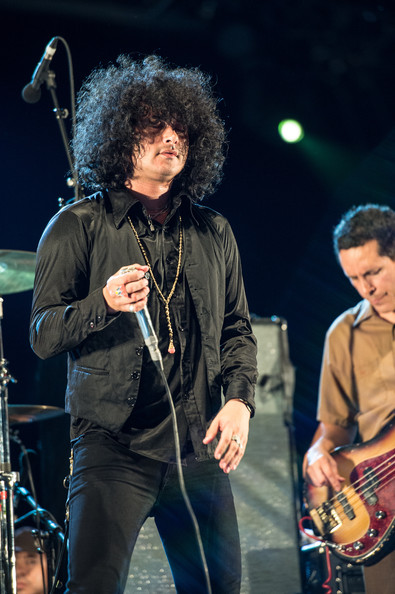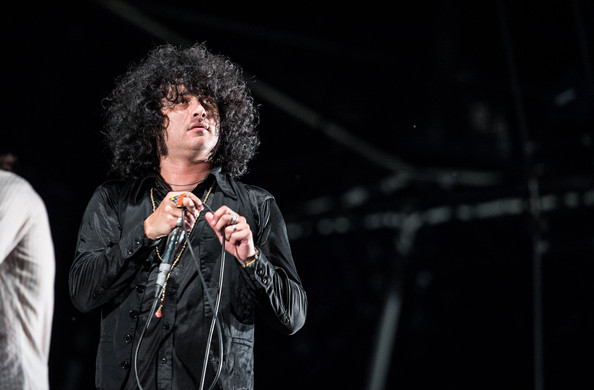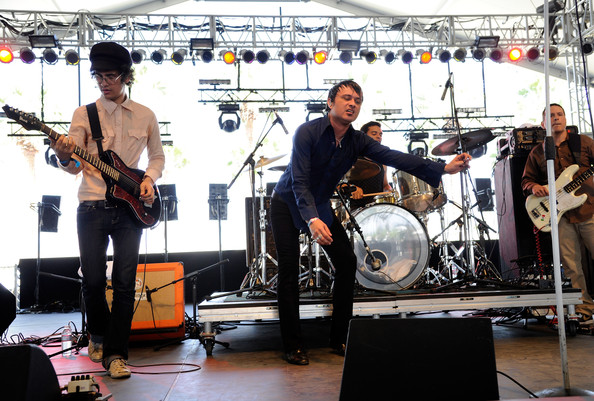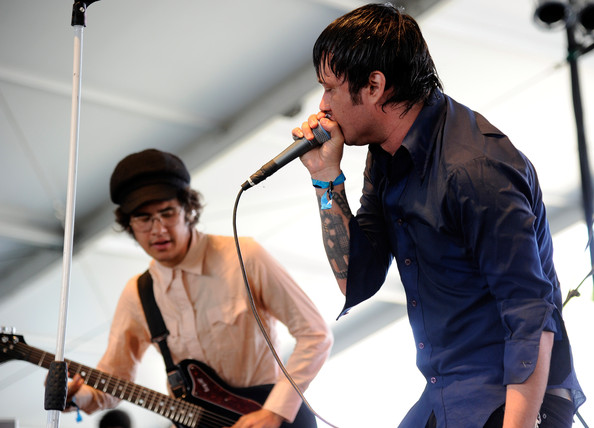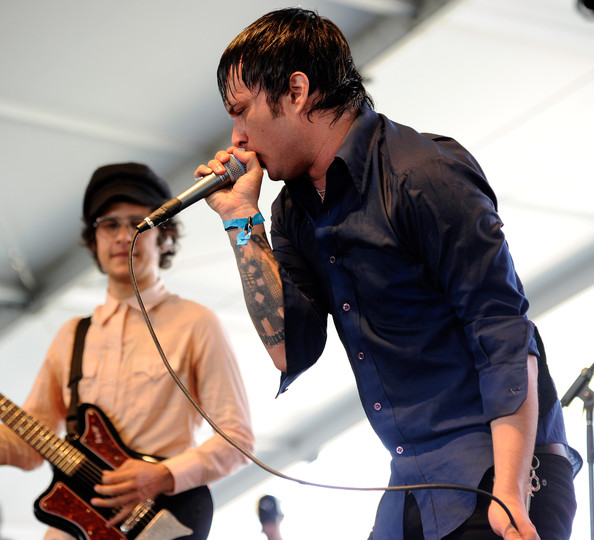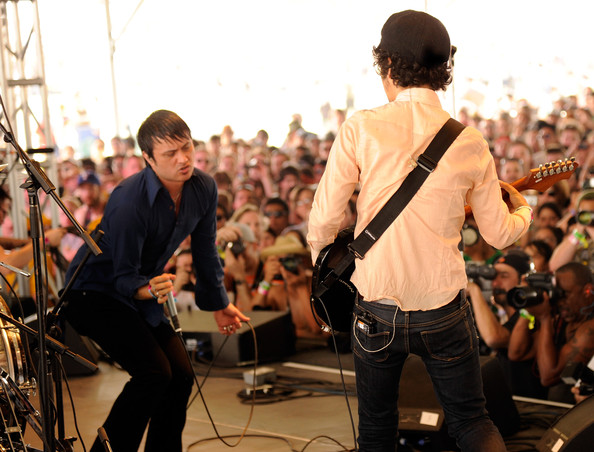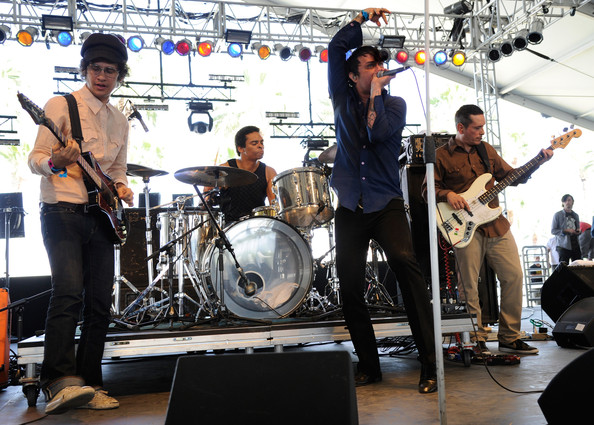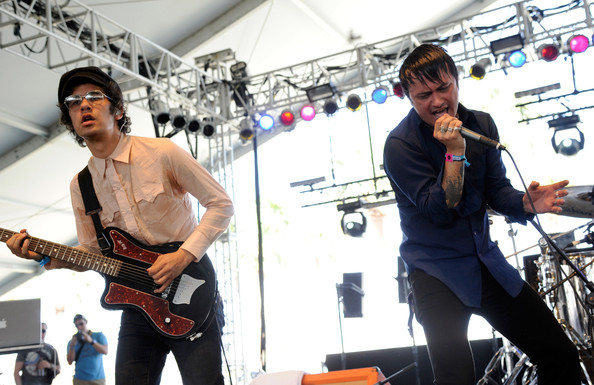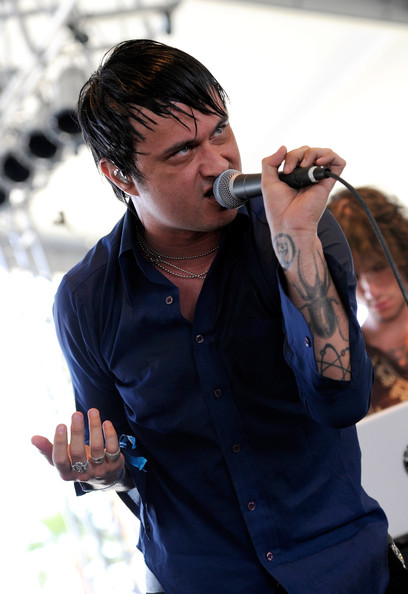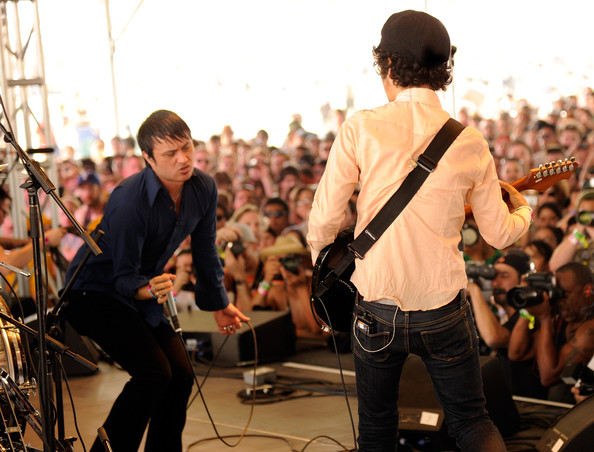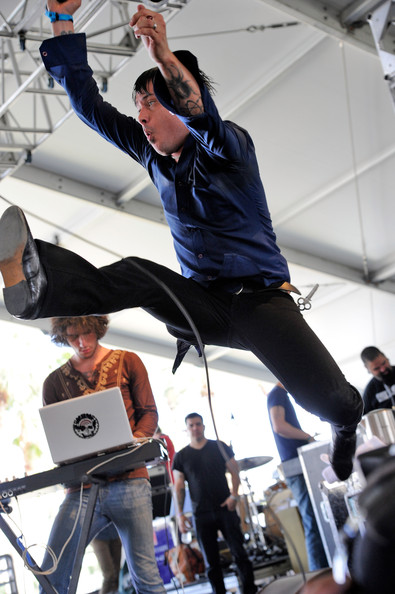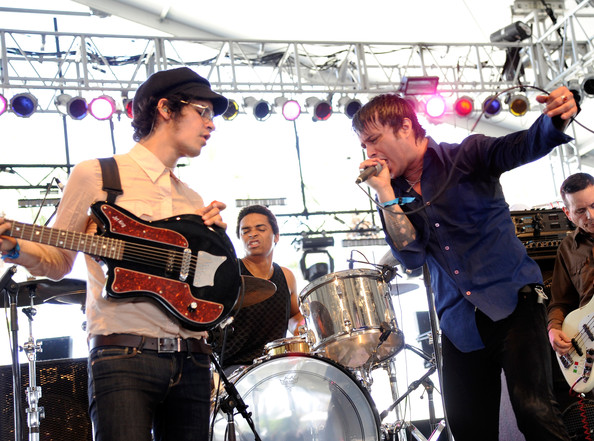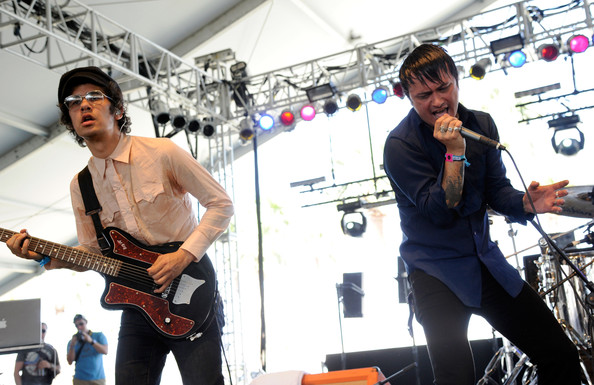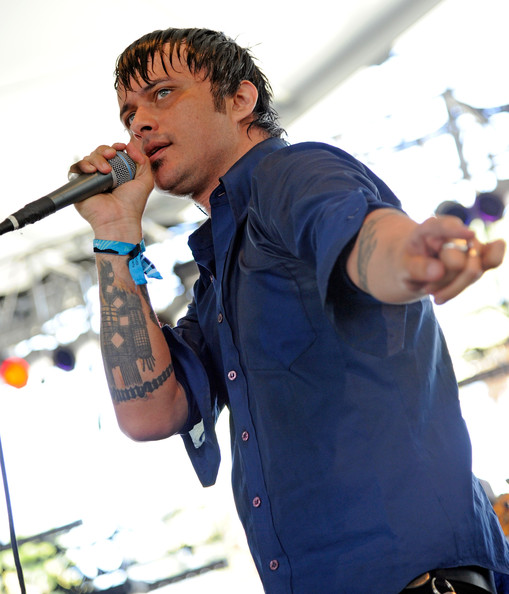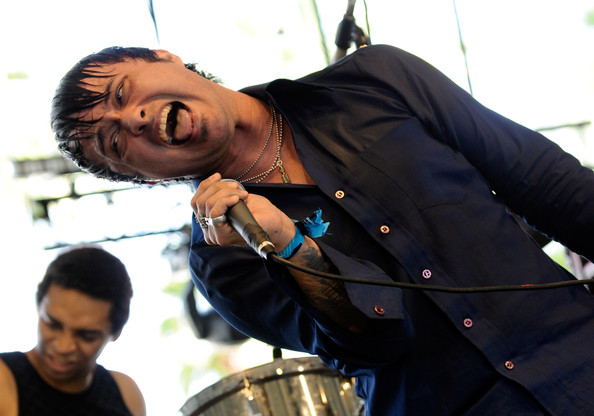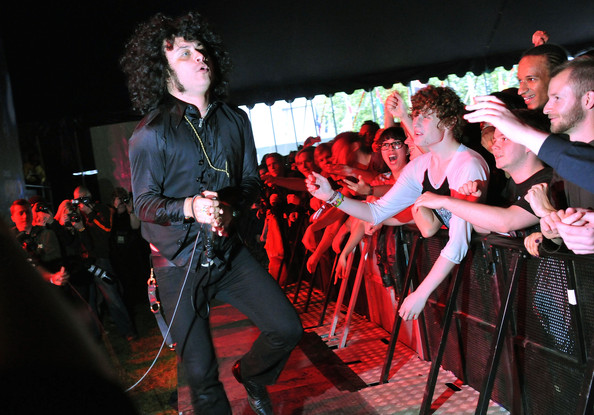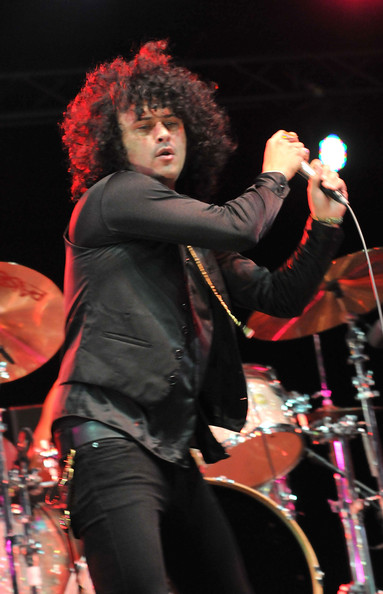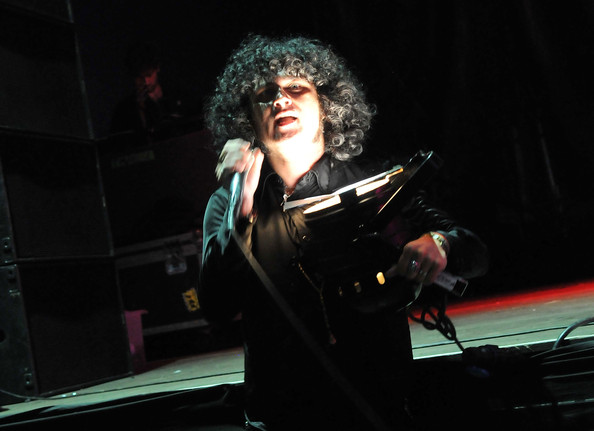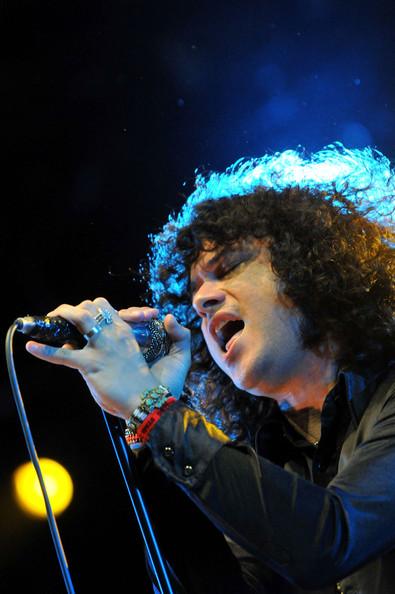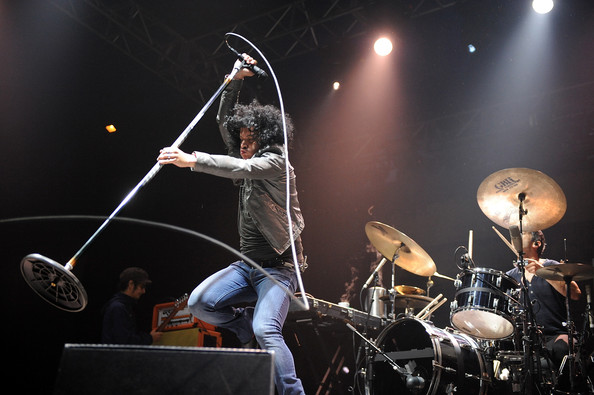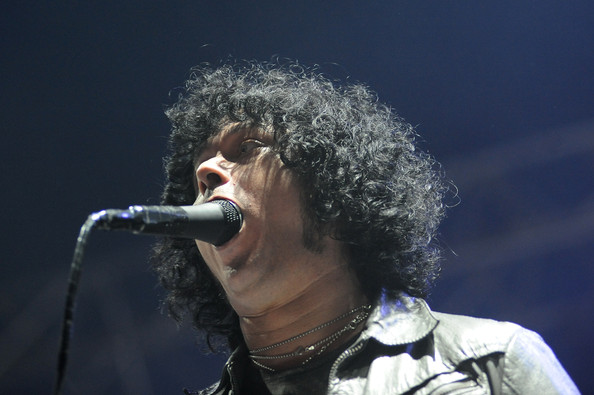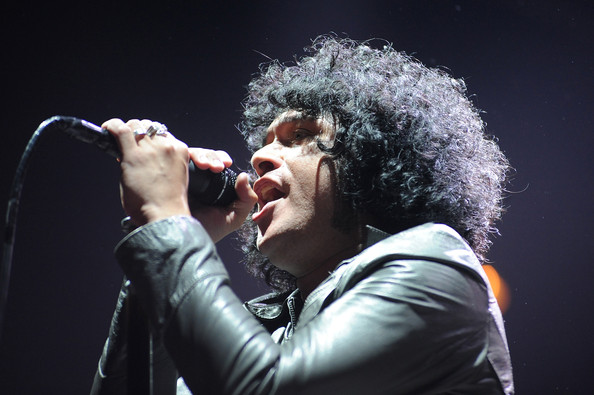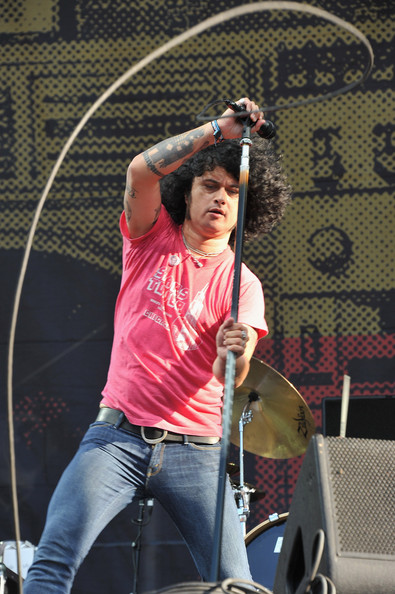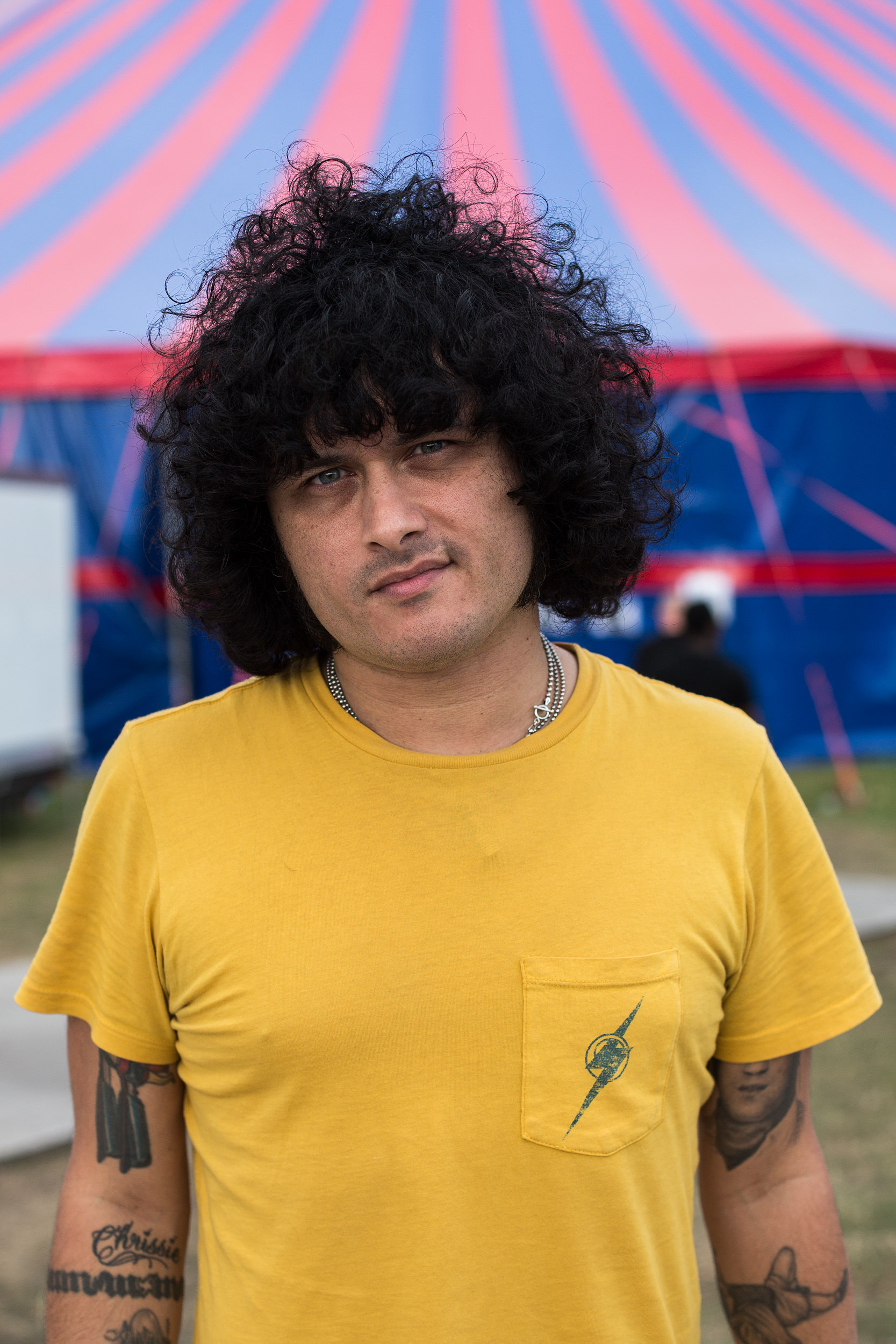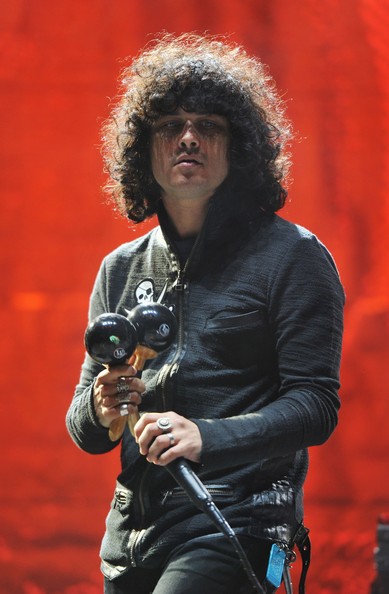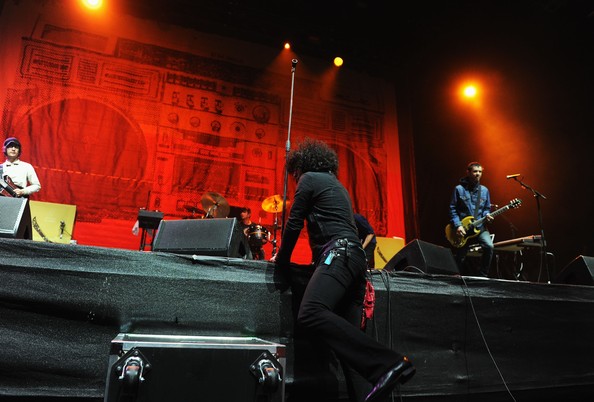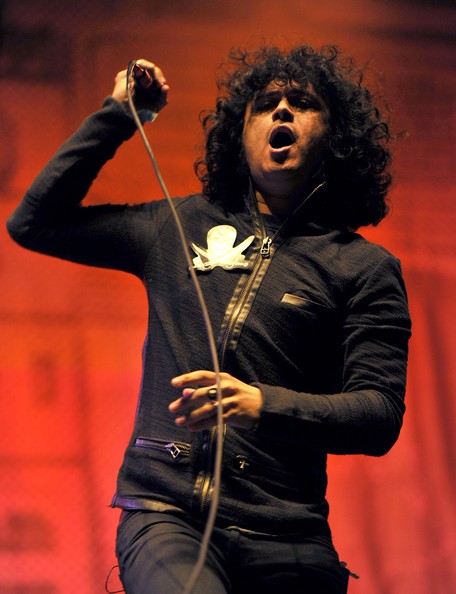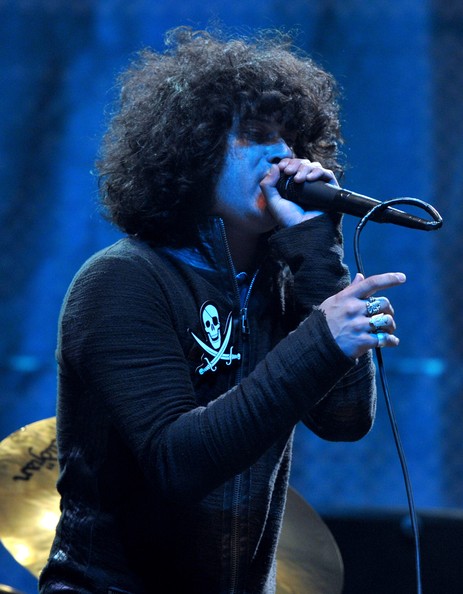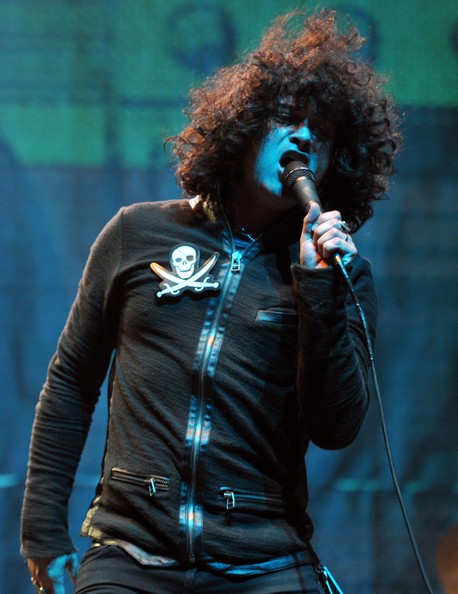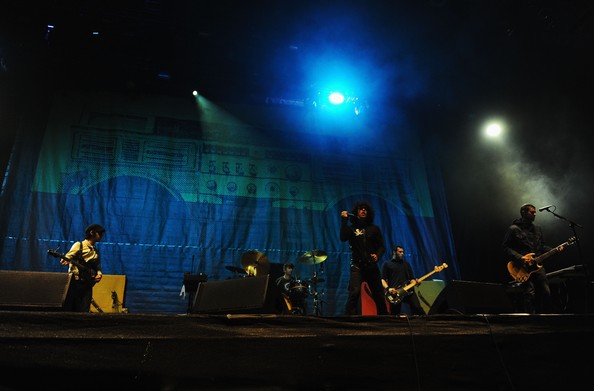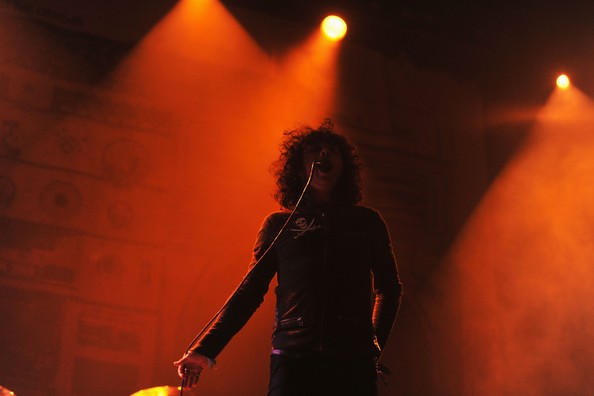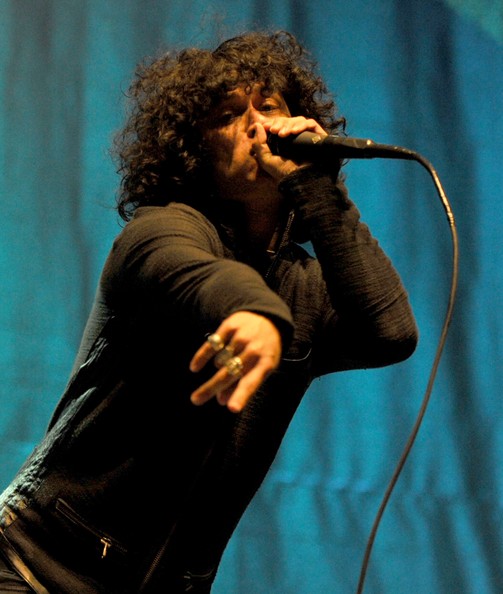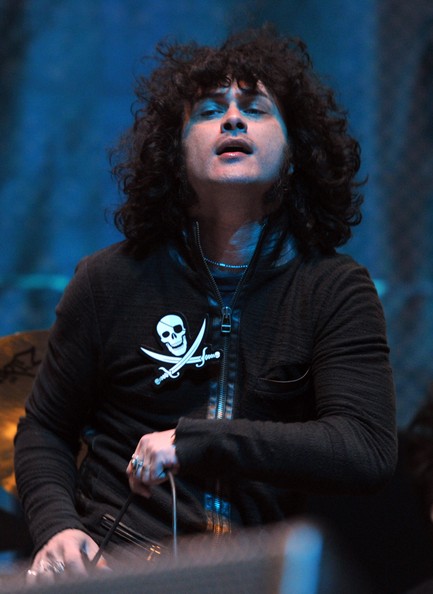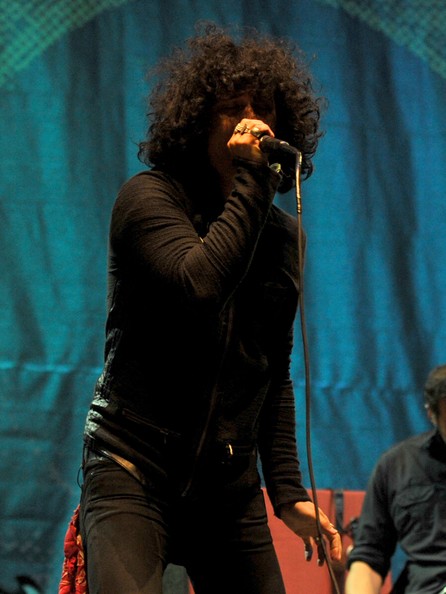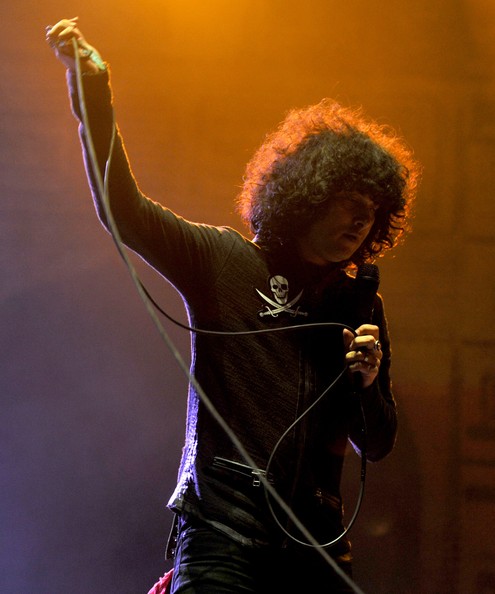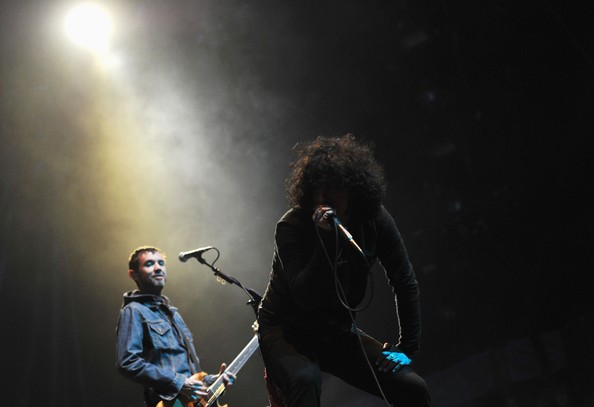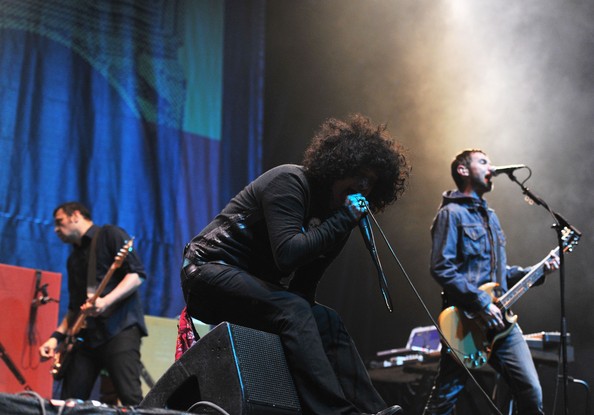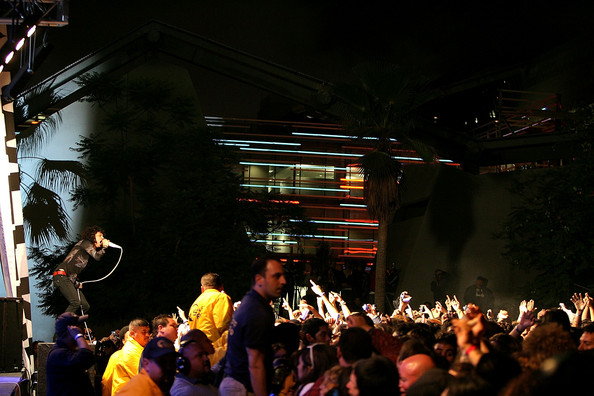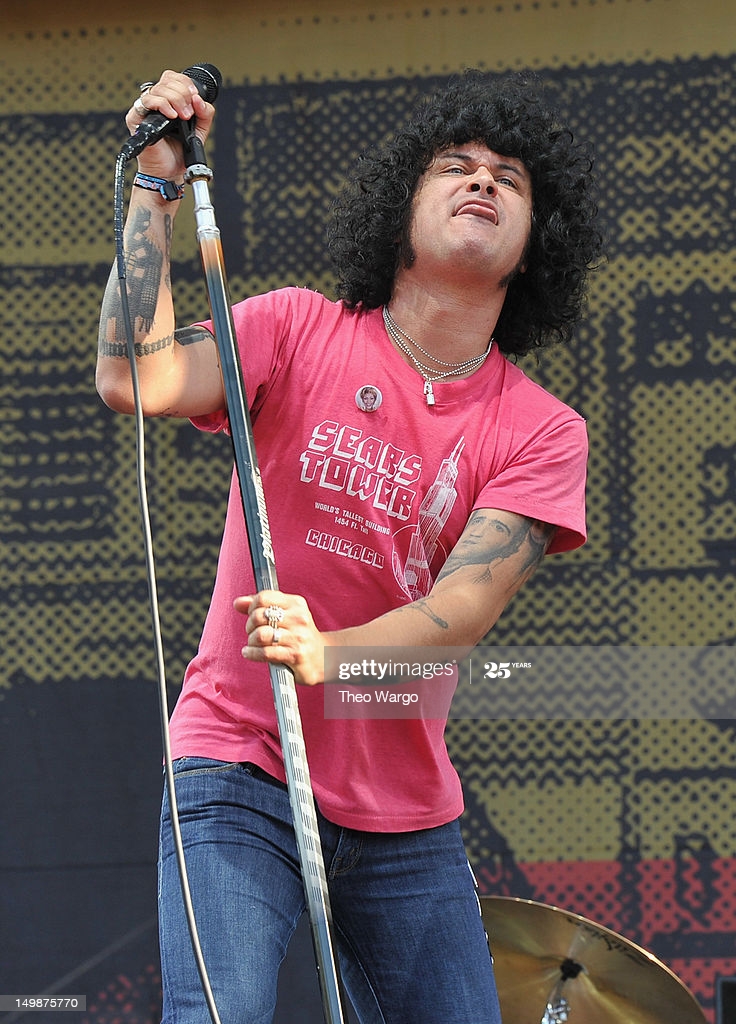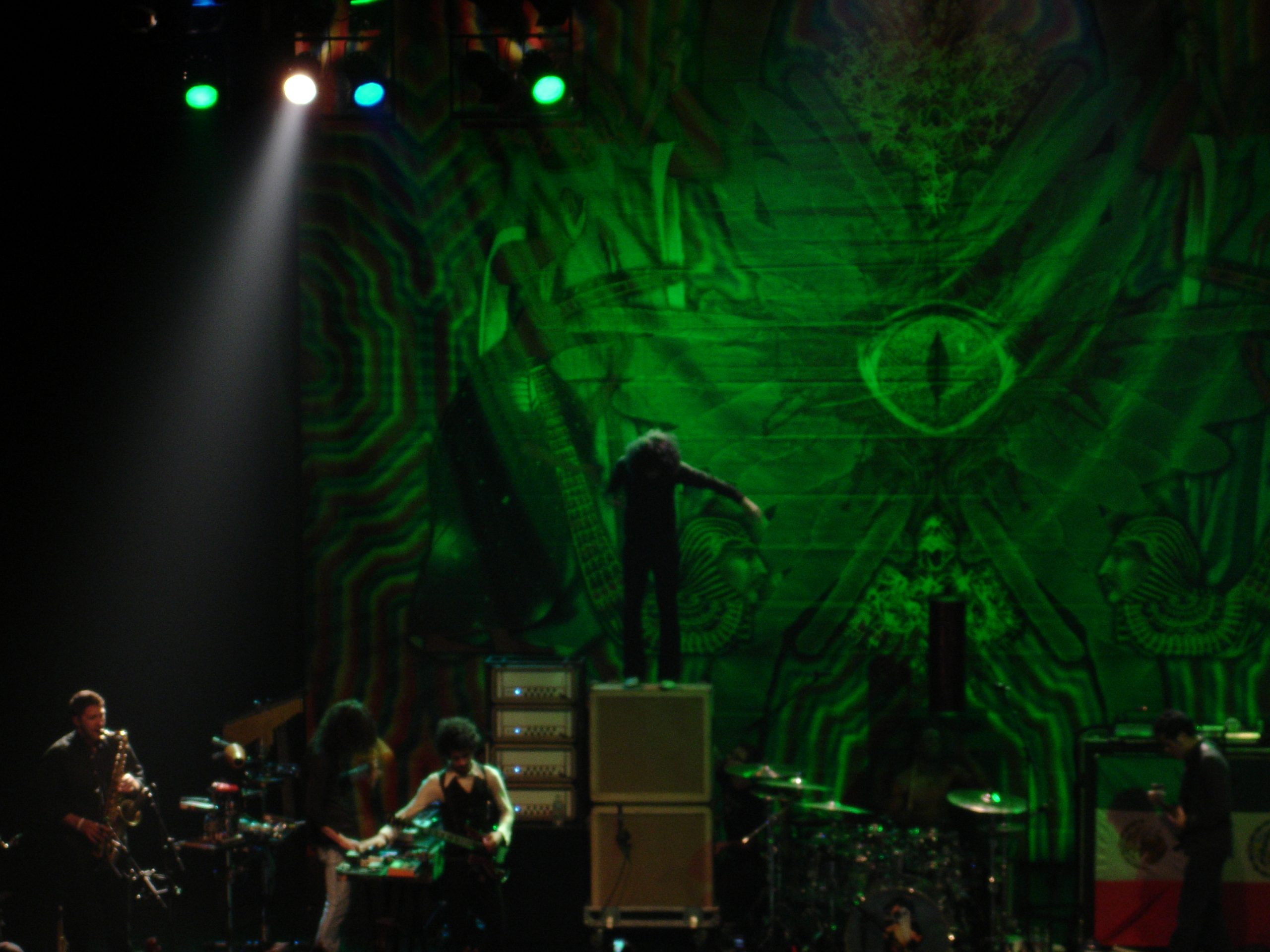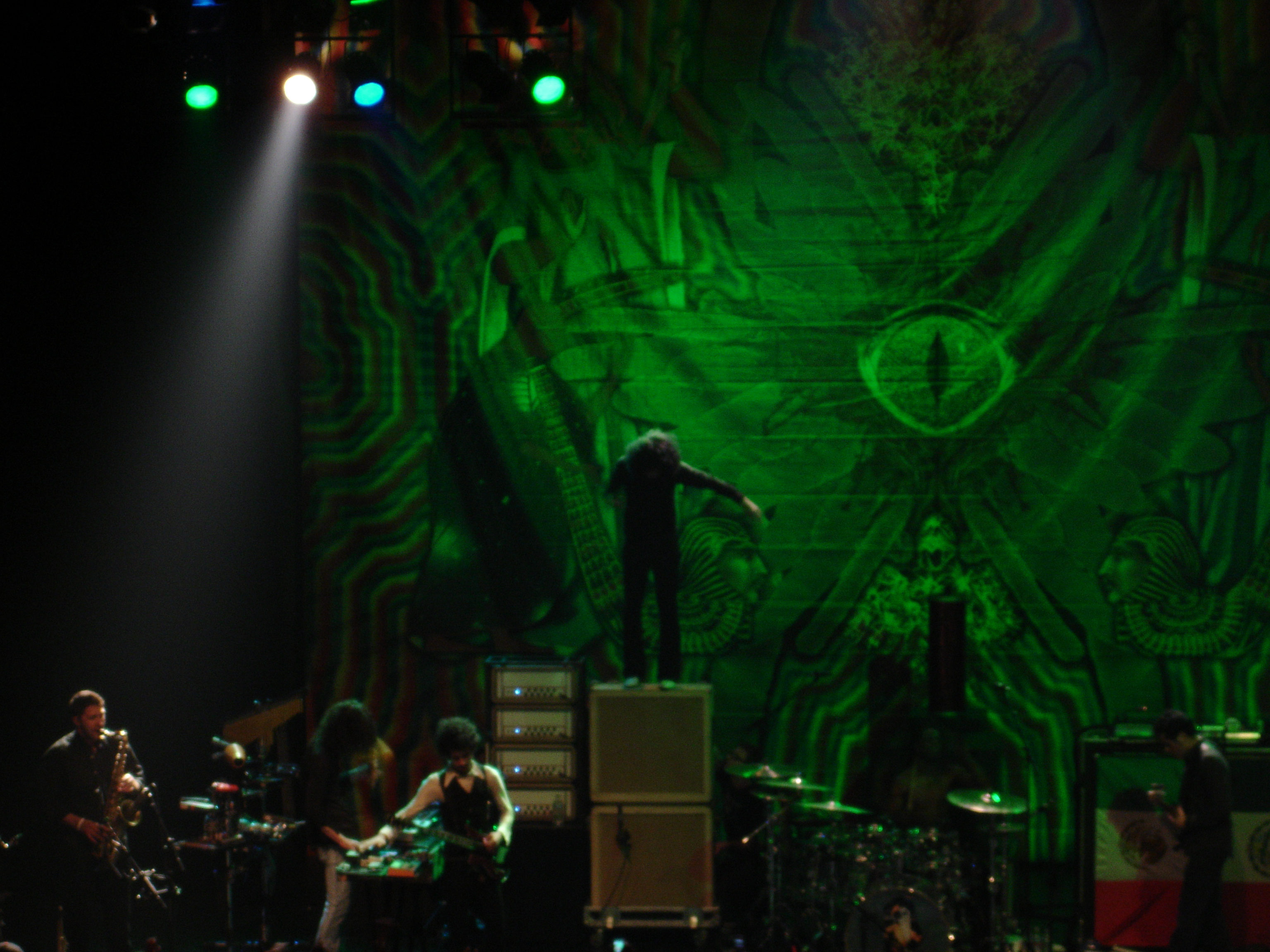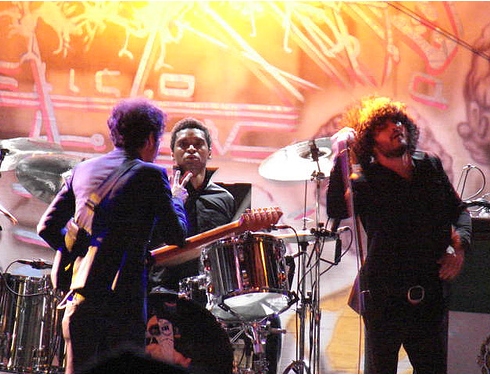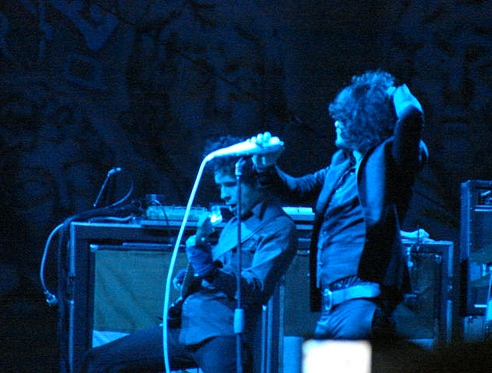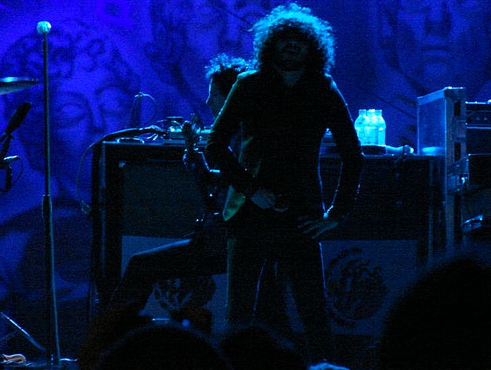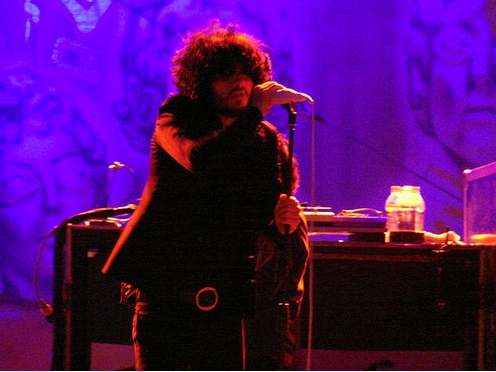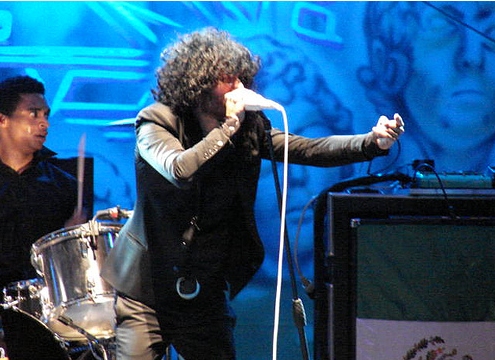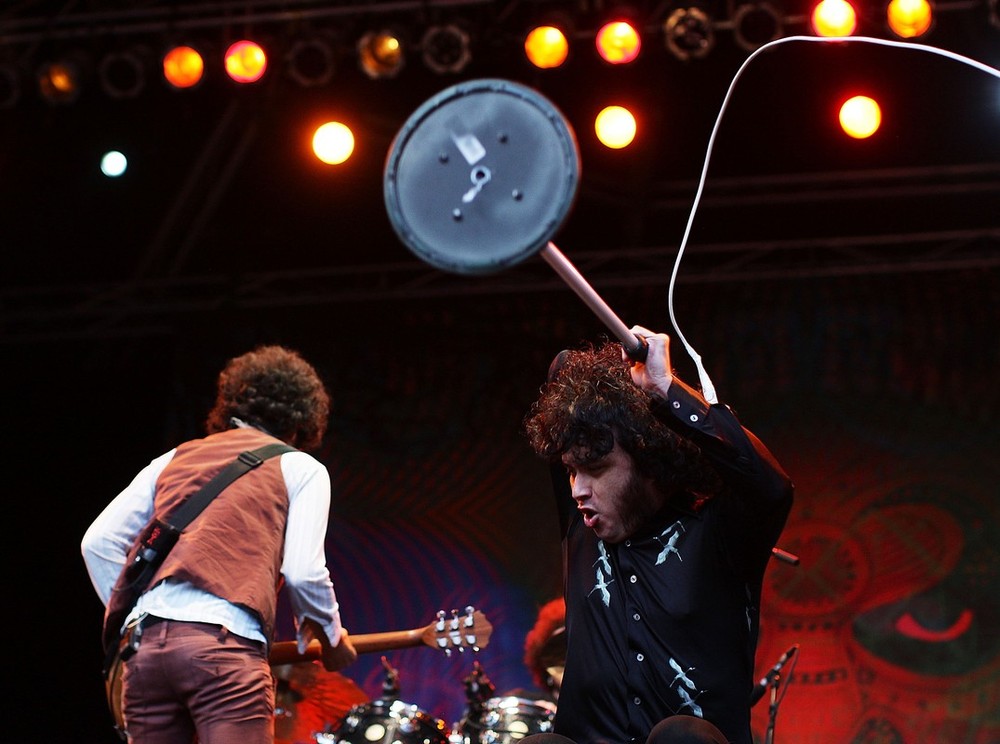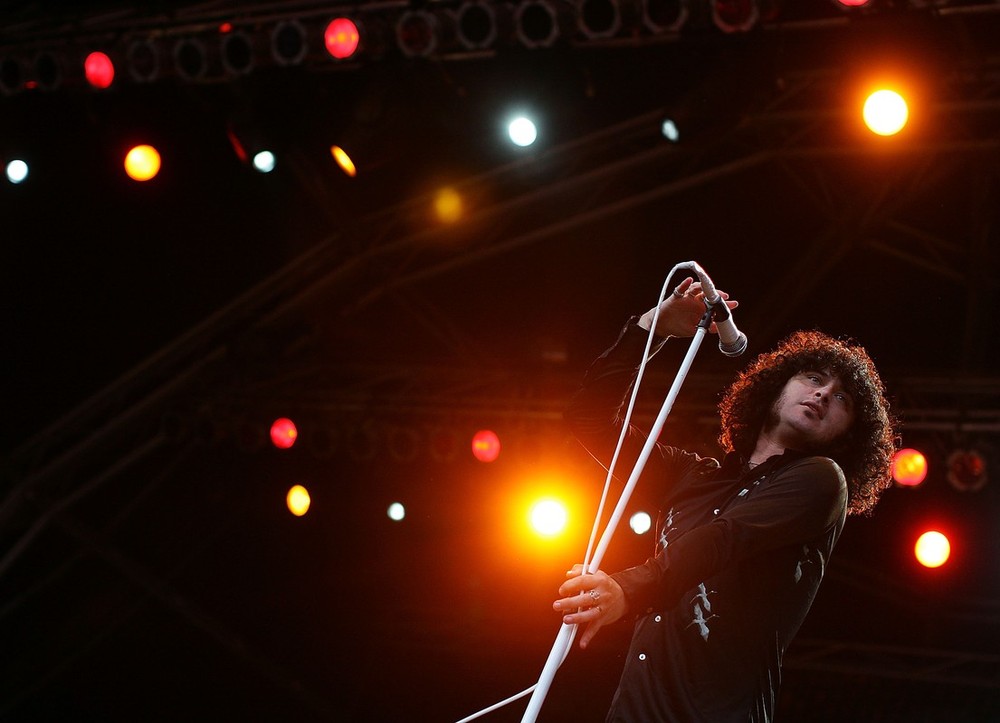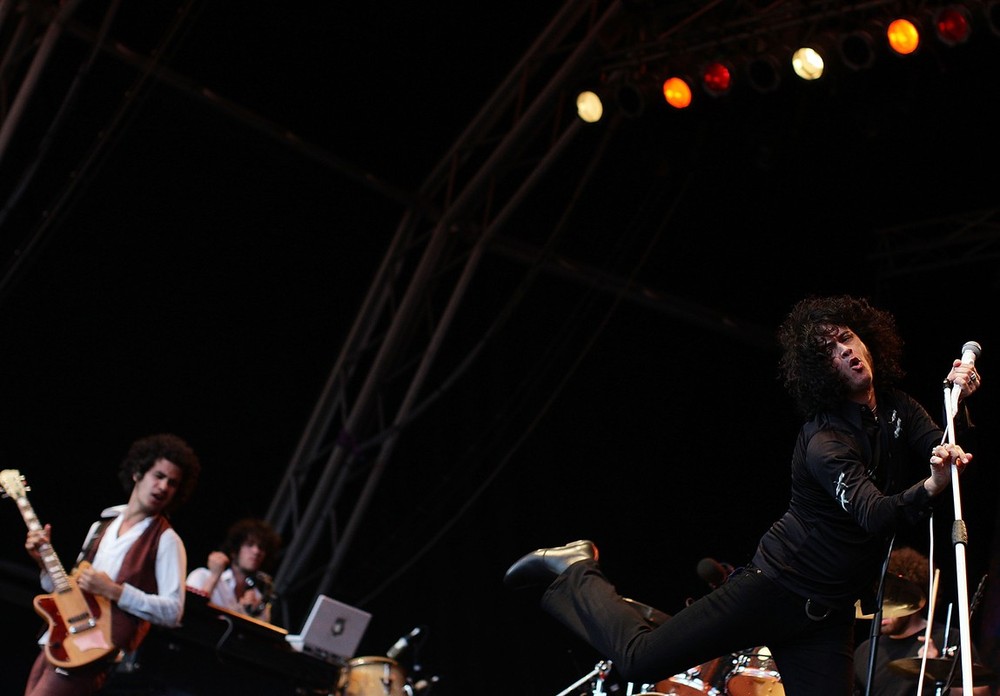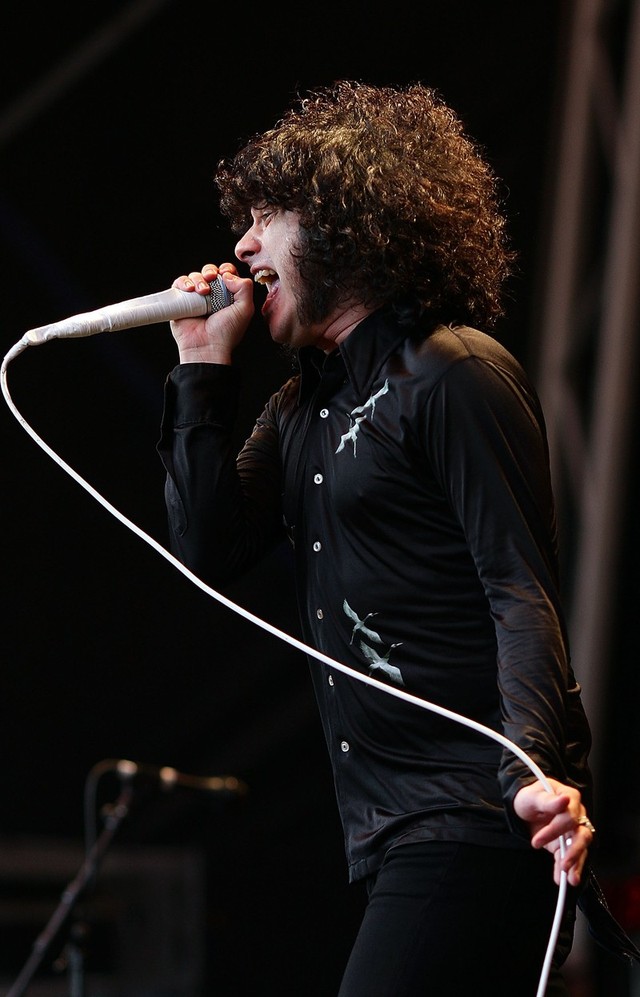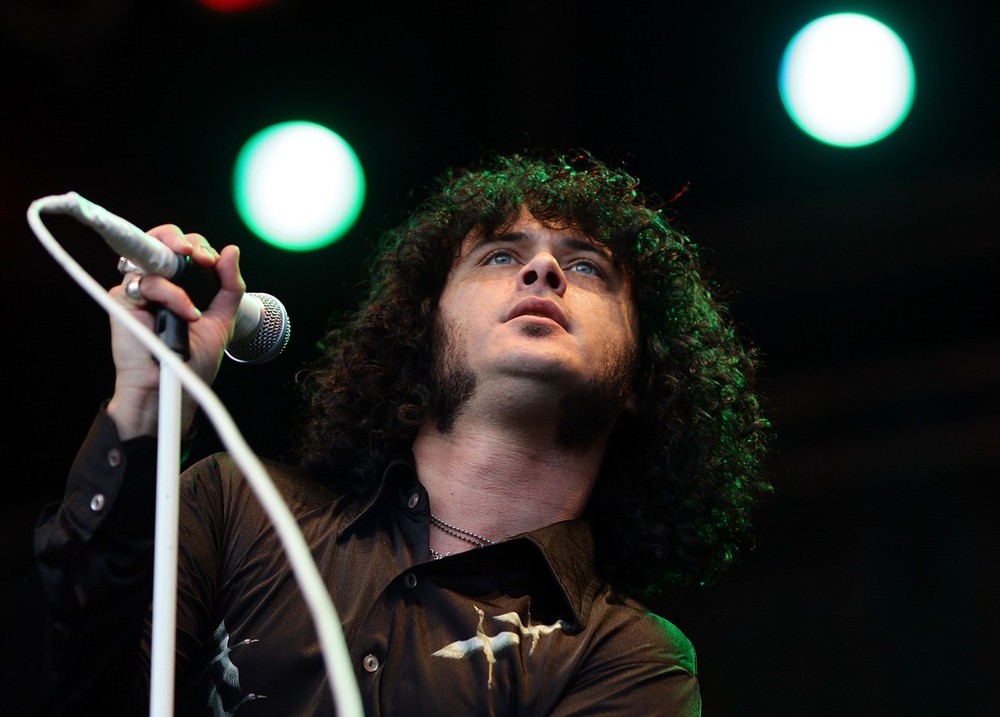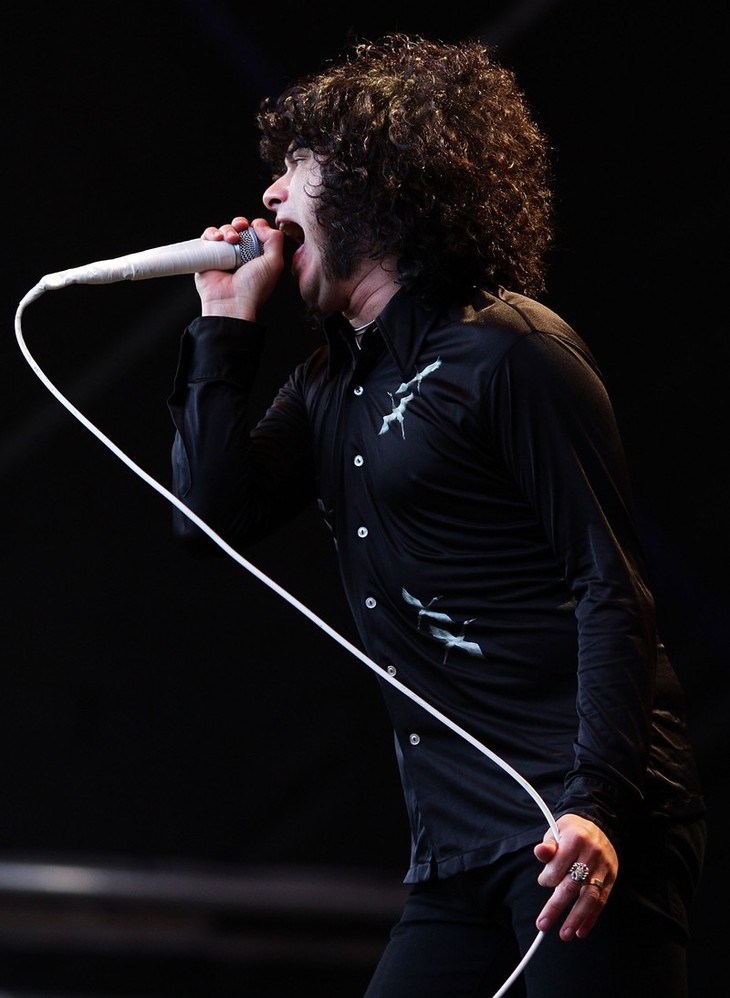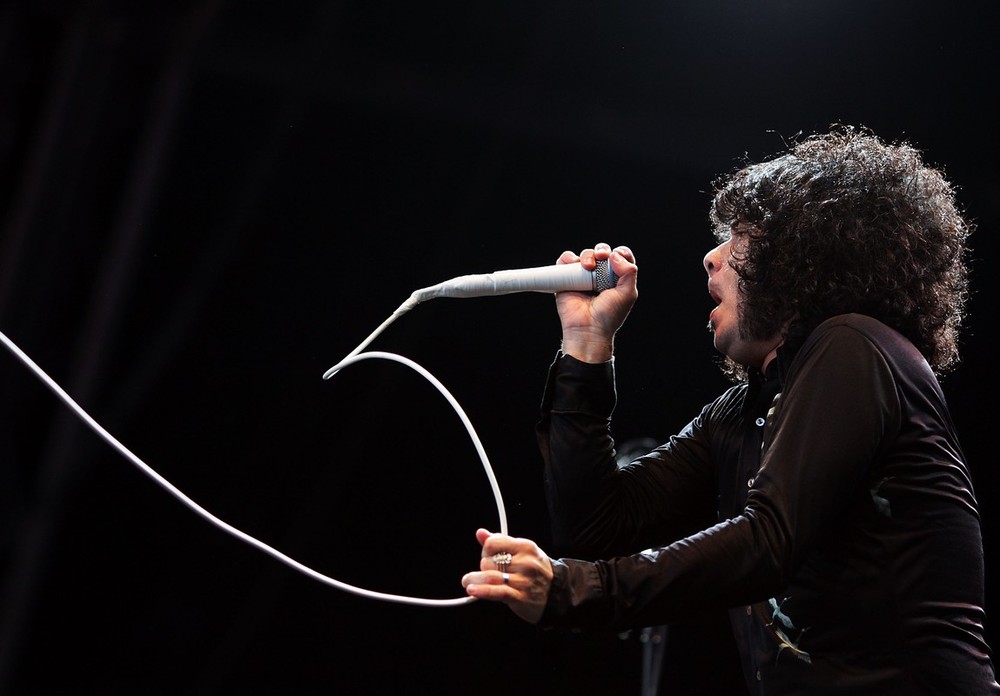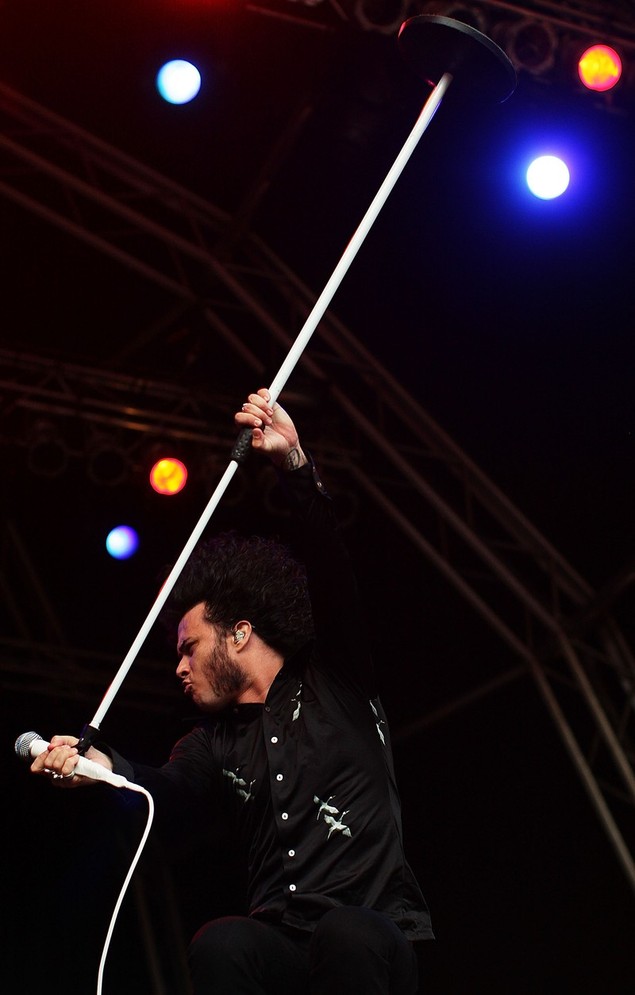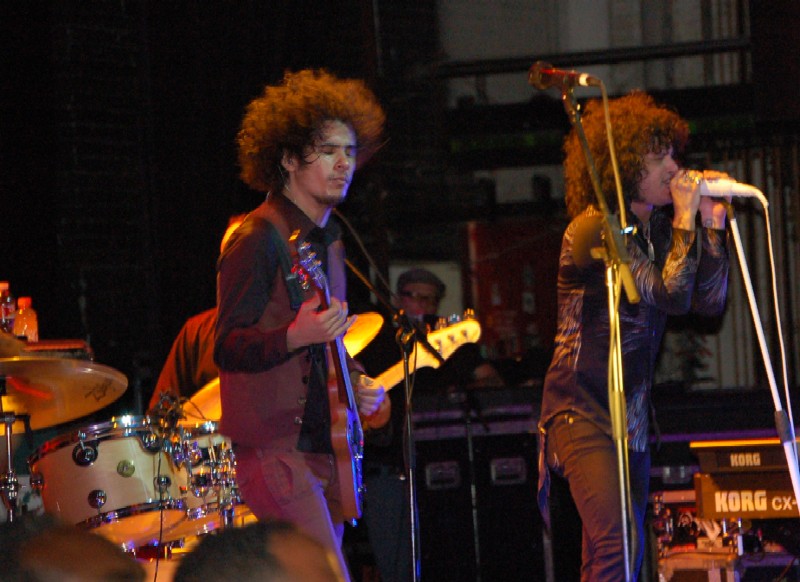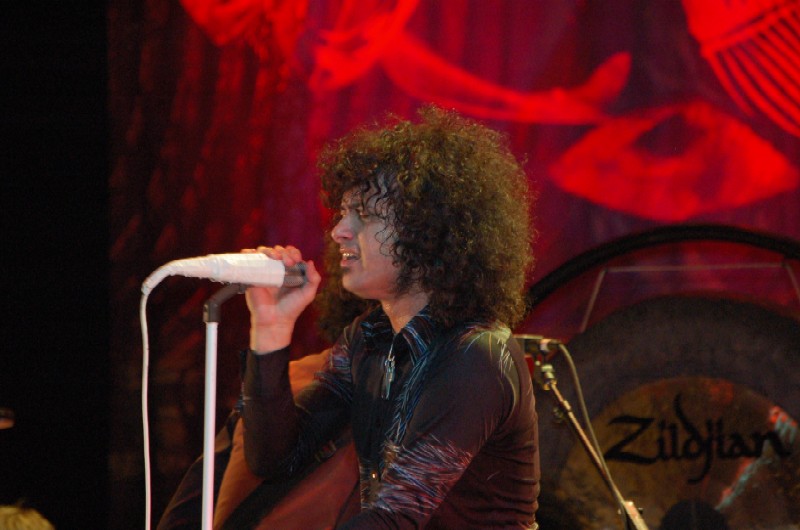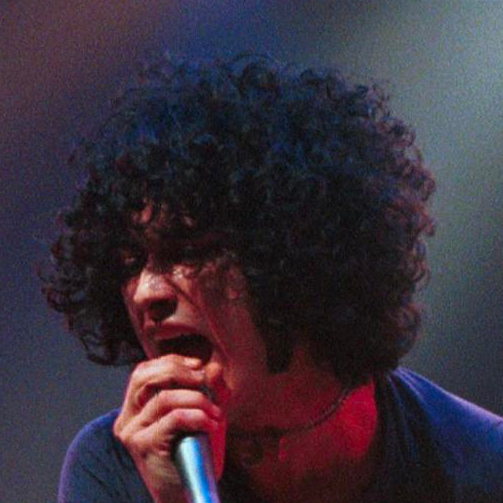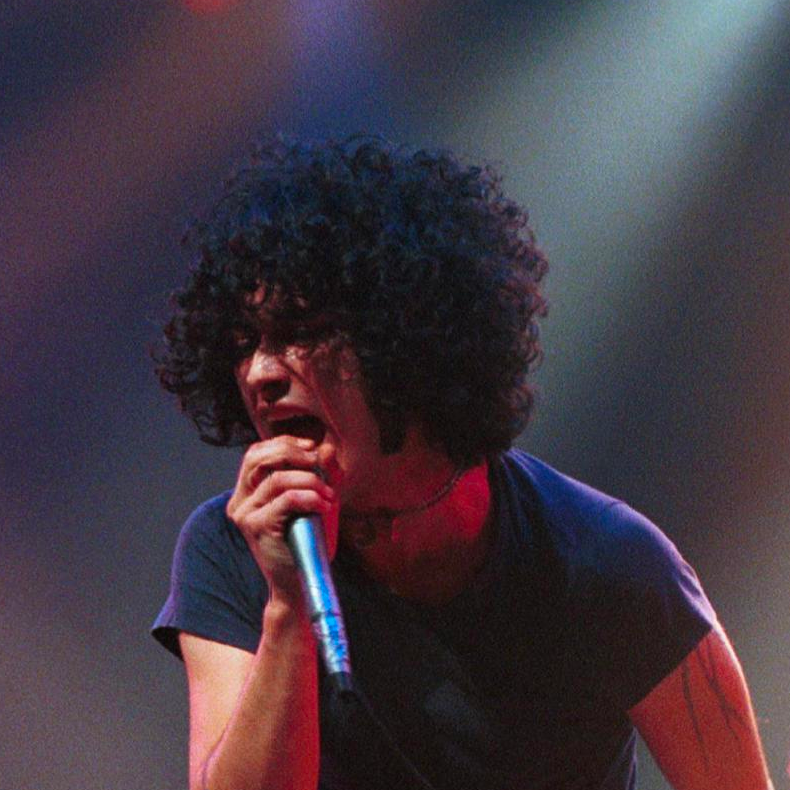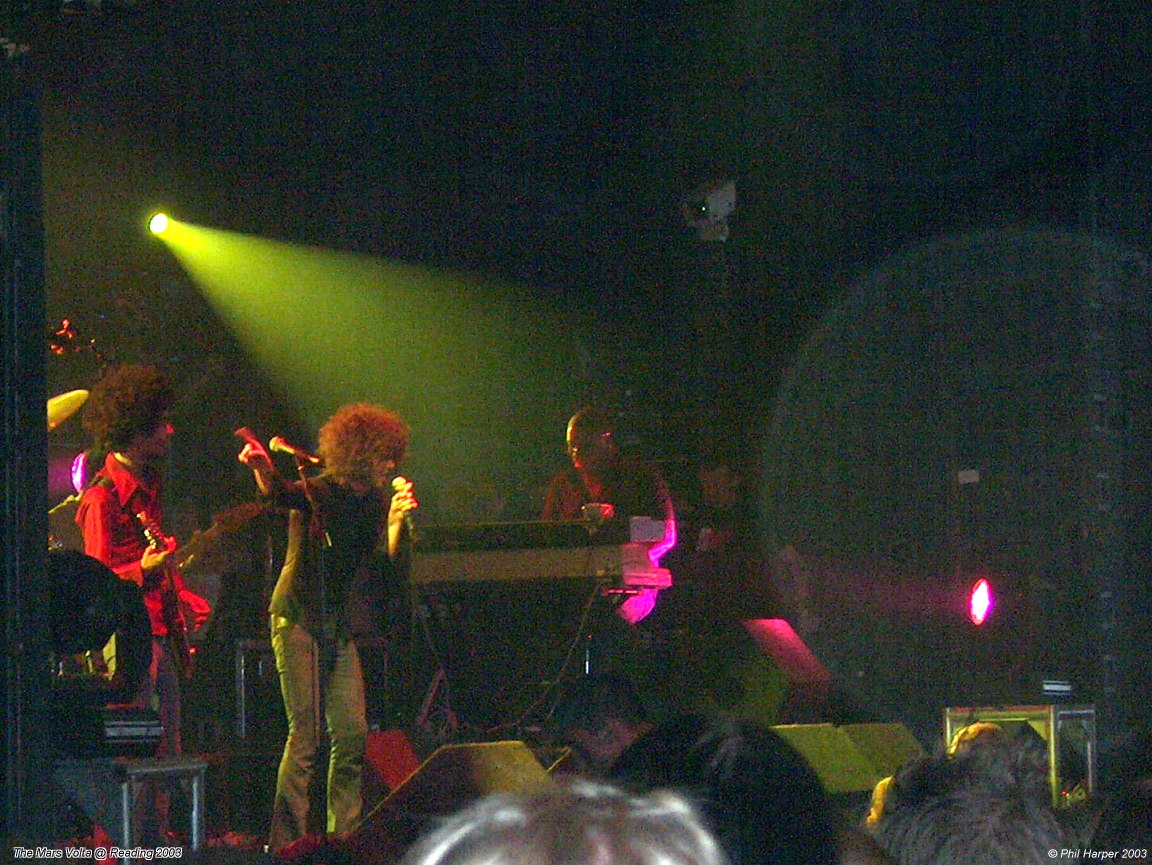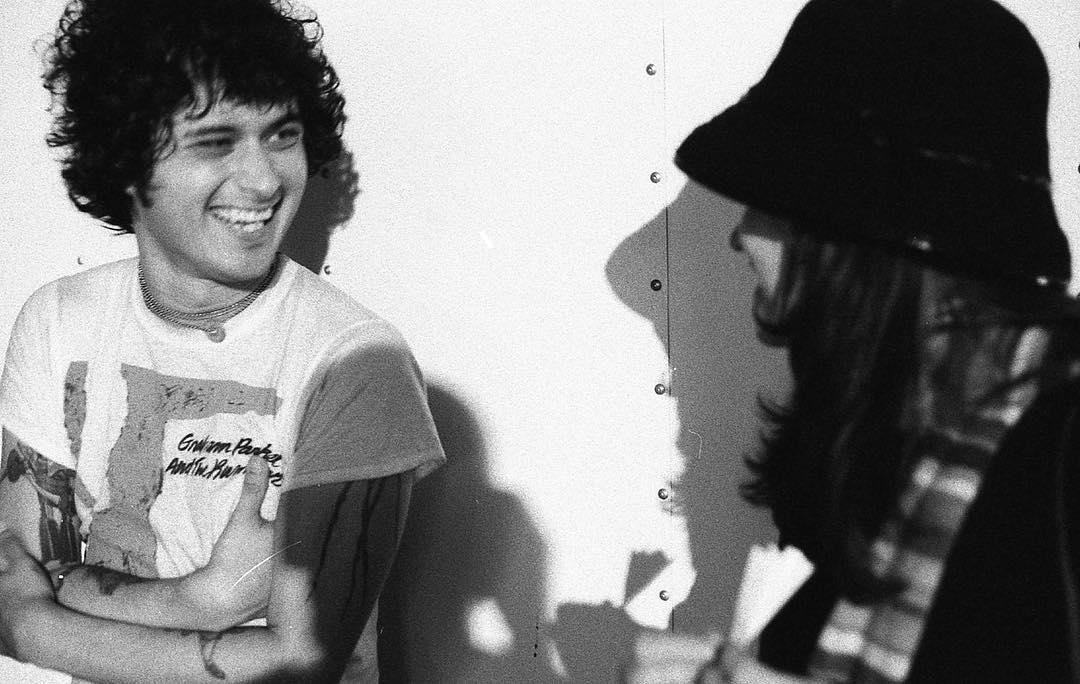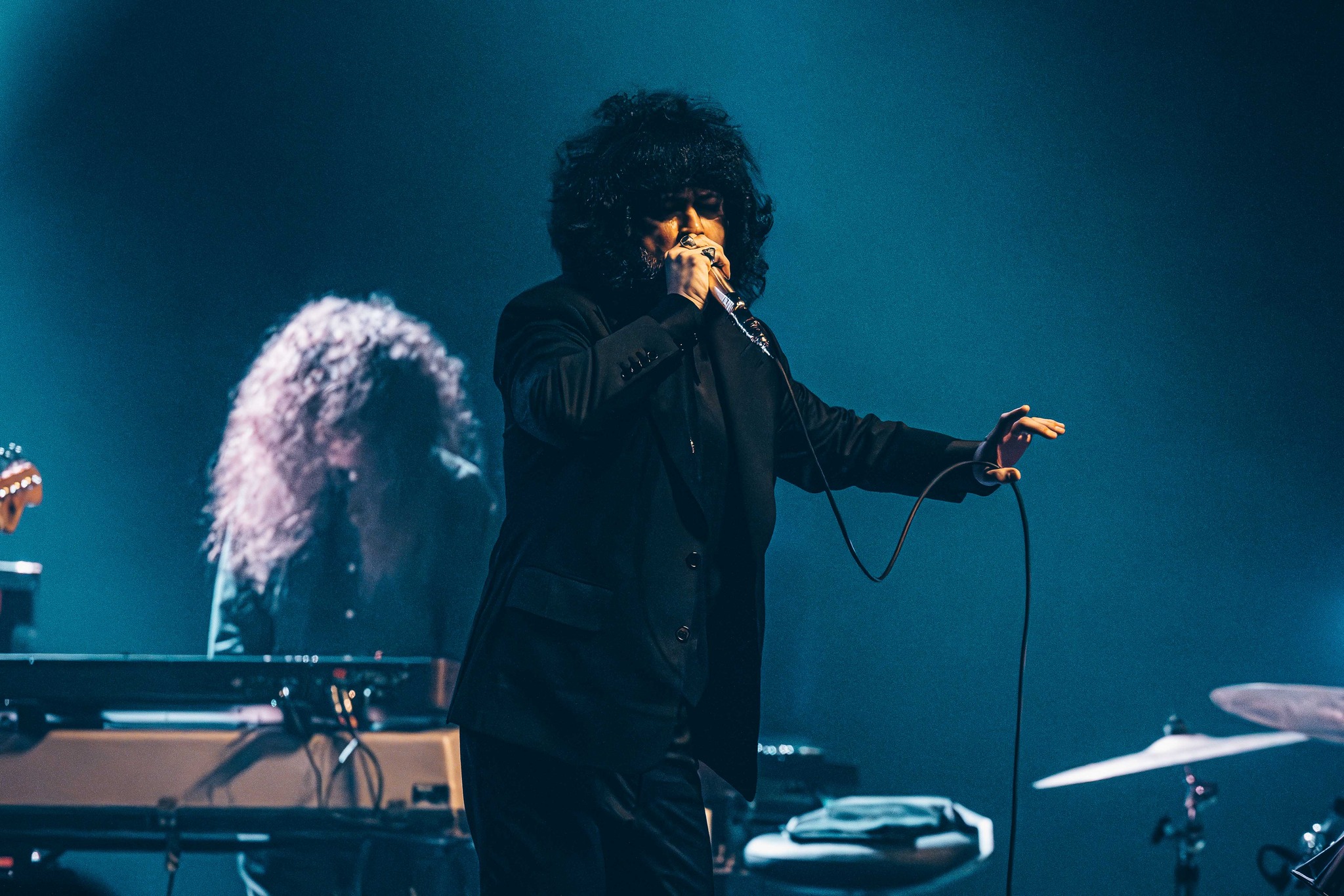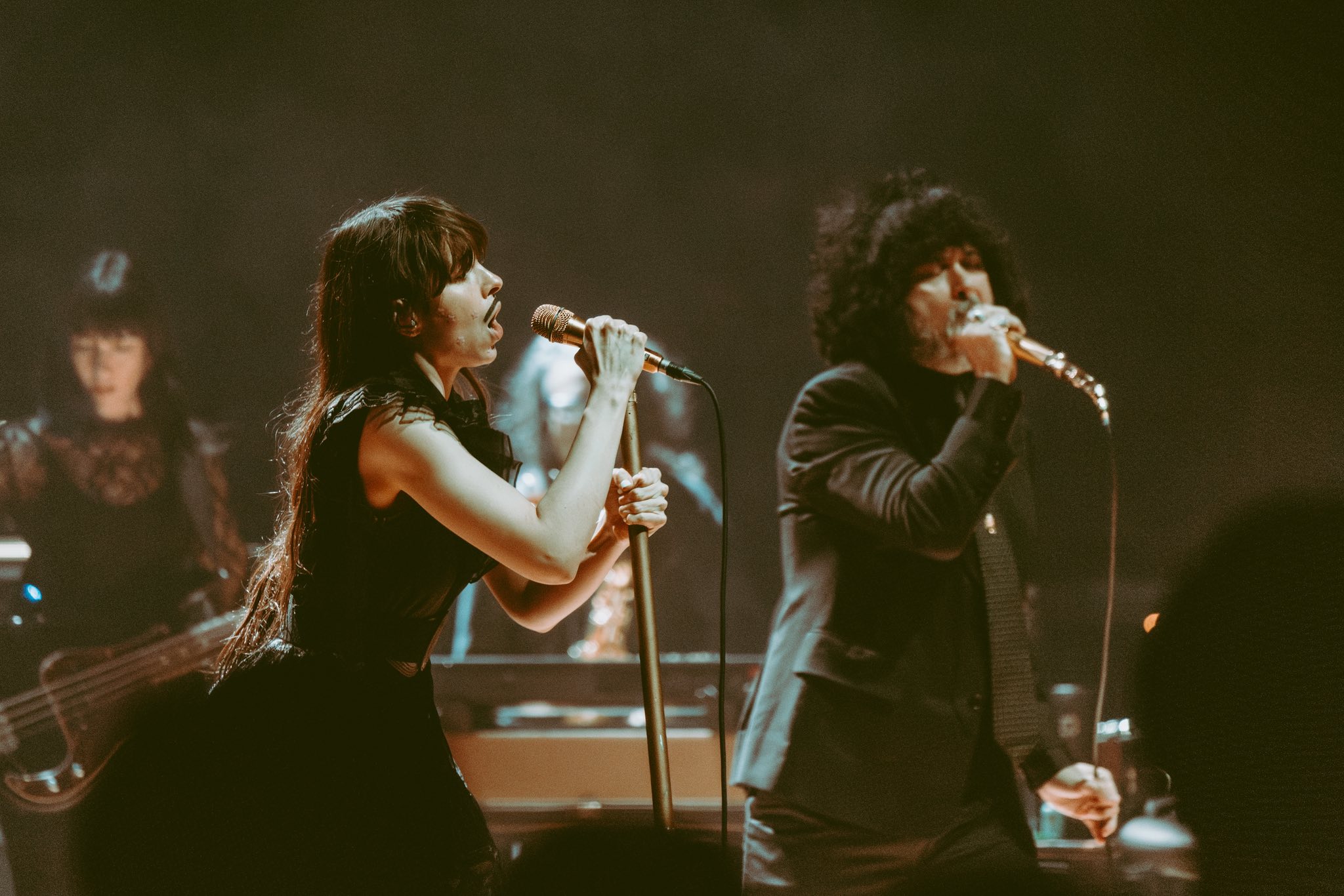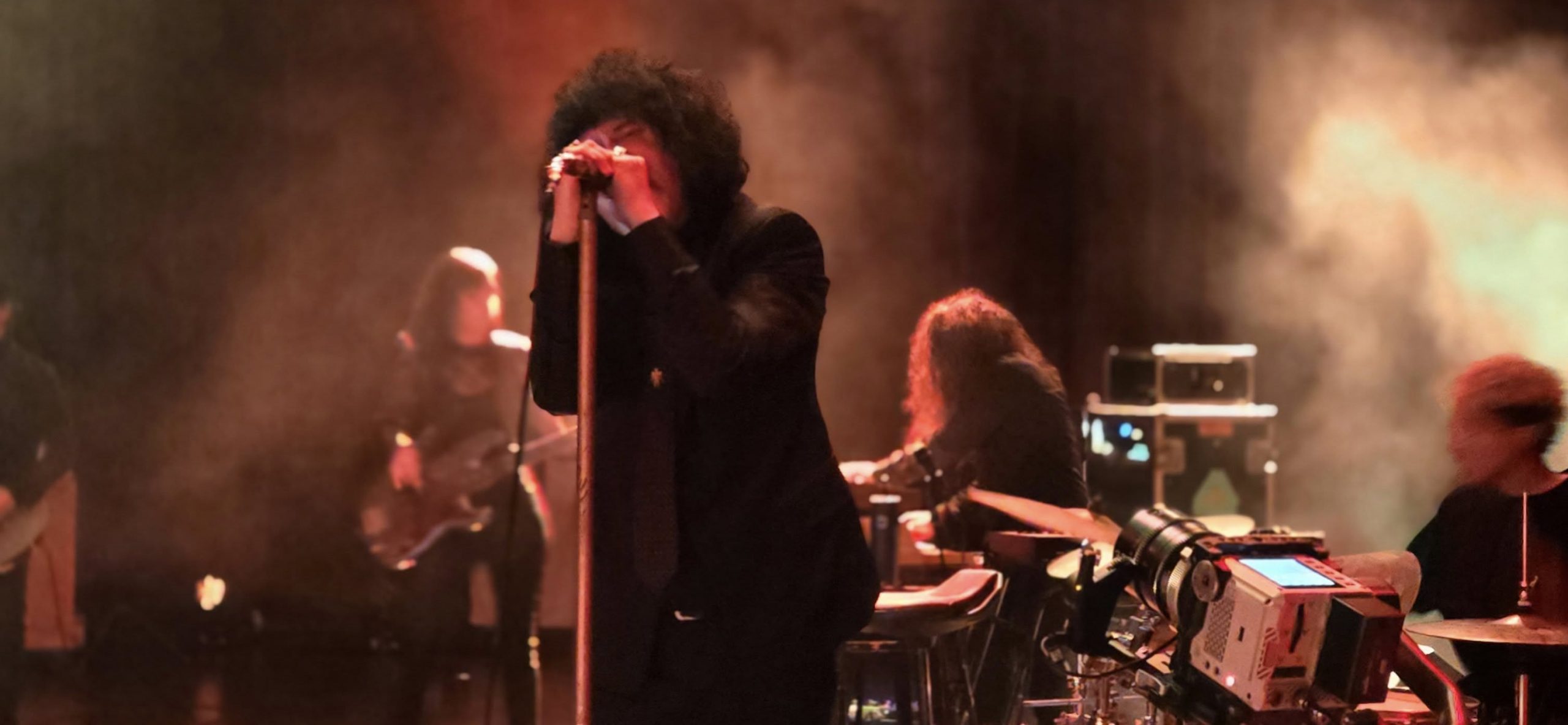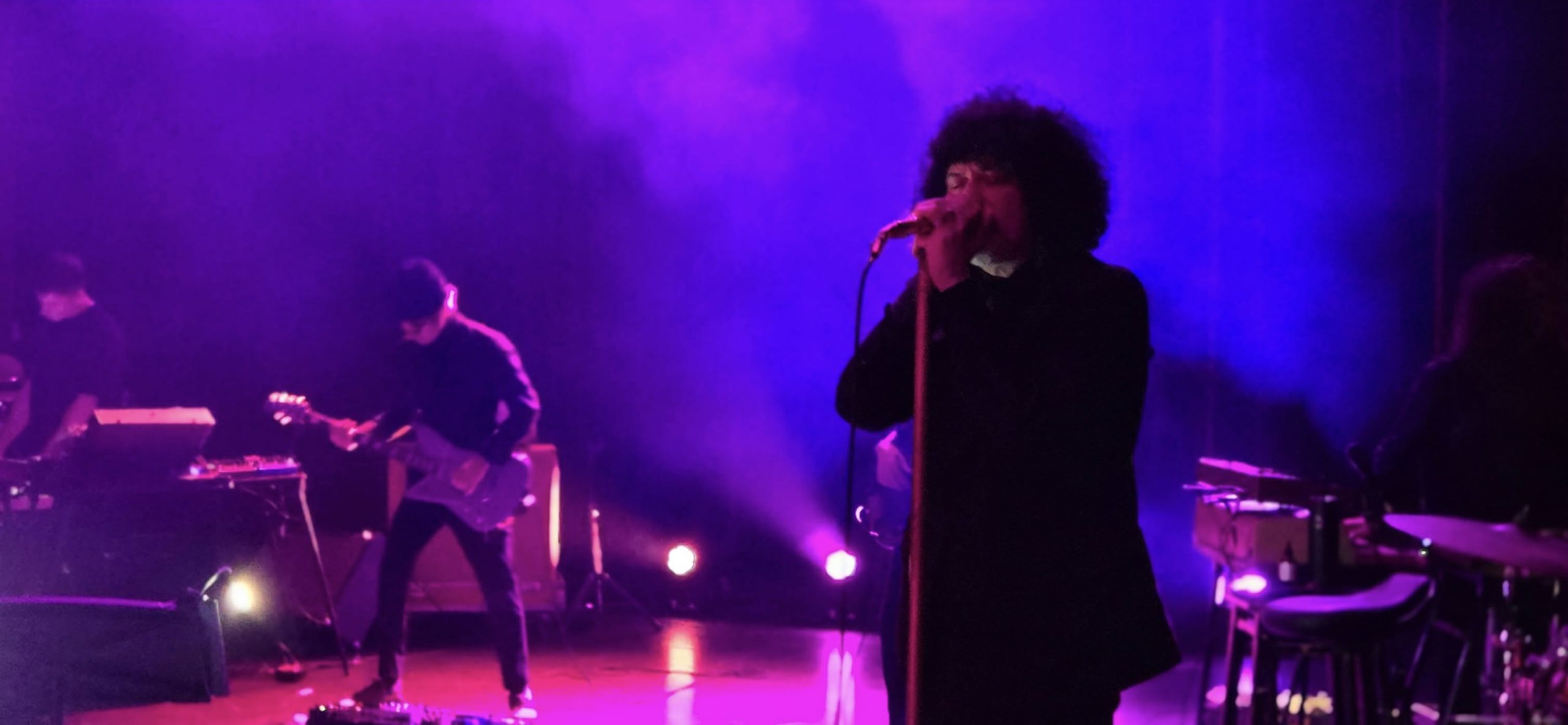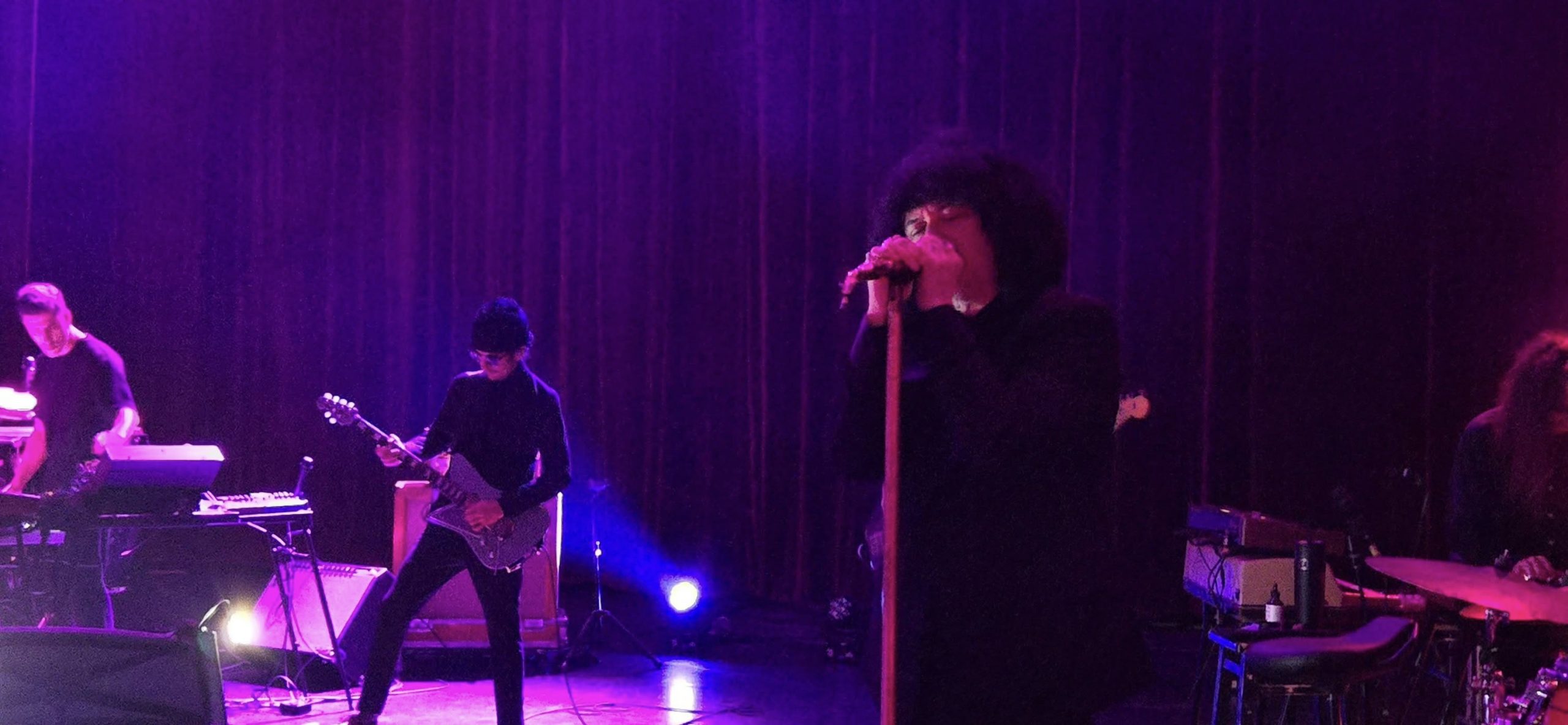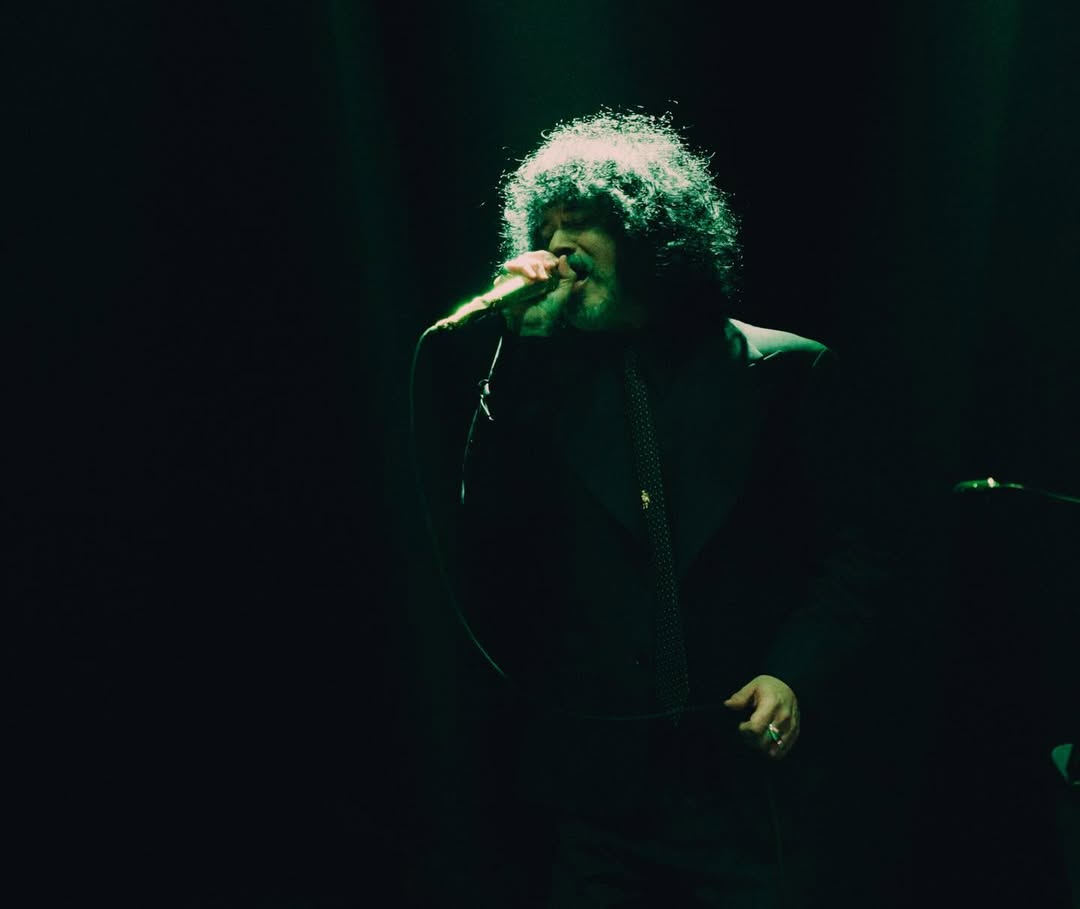
Cedric Bixler-Zavala (born November 4, 1974 in Redwood City, California) is a Grammy Award-winning American musician known for his work as frontman and lyricist of The Mars Volta, Antemasque, Zavalaz, and At the Drive-In. Cedric has played in a multitude of other bands in various capacities such as drummer in Dregtones, Foss, Anywhere, The Fall on Deaf Ears, and De Facto. He has additionally performed in less documented bands like Thee Gambede Meatleak, Phantasmagoria, Distorted Silence, and Marcellus Wallace. He is known for high energy live performances often dancing intensely or jumping off high places. Vocally he is well regarded for his cryptic lyrics and dynamic vocal range, spanning from the G above Low C (G2) to Soprano C (C6). Cedric has also been known to use his voice in more chaotic ways such as during his time in At the Drive-In where his lyrics were barked and shouted.
Cedric spent much of his youth in El Paso Texas, becoming heavily involved in the punk and skate culture scenes. In 2011 Cedric commented that his much of his early exposure to music was mellower music, stating “growing up at all my parents functions was a lot of oldies and freddie fender. very chicano based music. santo and johnny, lowrider style soundtracks. my dad listened to a lot of buddy holly, chuck berry. the bee gees ballads were always playing on my moms radio. my dad had an old reel to reel player that he would play all his amercian stations that broadcated [sic] during his stay in vietnam, then came a 8 track players.” He noted one of his earliest influences was Kiss, specifically Destroyer and Love Gun.
One of Cedric’s earliest bands was a group called Distorted Silence, which he played in as a teenager. At age 15 he transitioned over to Phantasmagoria, stating “You can’t learn how to be in a band through music school. You have to just live it. Wether it be robbing music stores for gear, fighting with other bands, getting chased by the police, and learning how to live in the moment & that’s what we did. These people are my heroes and my teachers.” Little about his time in Phantasmagoria is known, however it is the earliest known instance of Cedric playing with long time friend Julia Venegas.
Throughout his late adolescence and early adulthood Cedric would play in a myriad of bands including Dregtones, Foss, Thee Gambede Meatleak, and The Fall On Deaf Ears. None of these groups lasted more than an single release or a brief stint of live performances. Many also featured a similar cast of musicians reshuffled into different roles and sounds. It wasn’t that these acts, and others, didn’t shape him, in fact many little bits of those bands were integral in his latter succession, such as citing former congressman and bandmate Beto O’Rourke as an artistic influence ““The way I make art, I learned it from Beto,” Bixler-Zavala says. “He was learning as he went along, too, but he was sort of my older brother/mentor.” to being influenced by the deaths of former bandmates. Influences aside, it never seemed any his artistic endeavors would survive any extended period of time. Perhaps the music just wasn’t approachable enough, or perhaps the musicians did not have the same level of commitment as him.
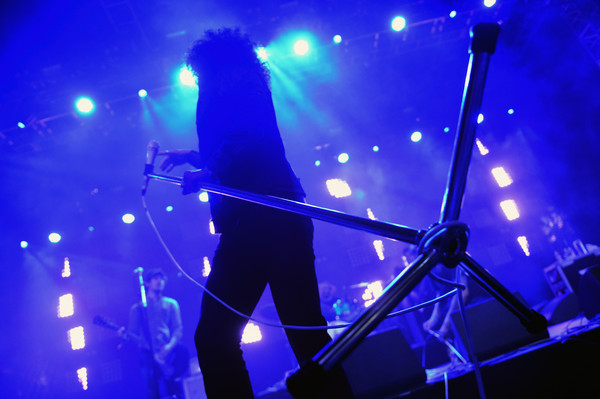
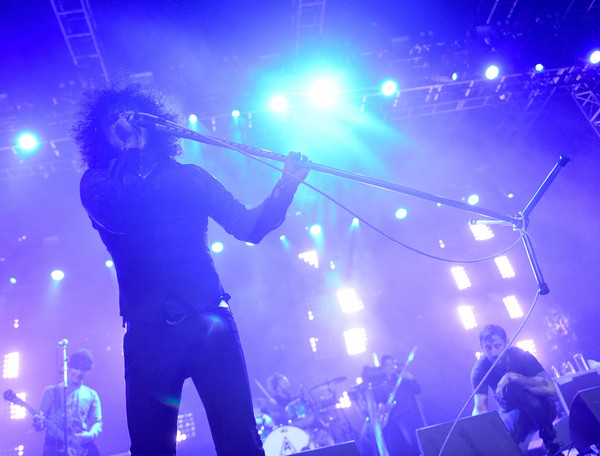
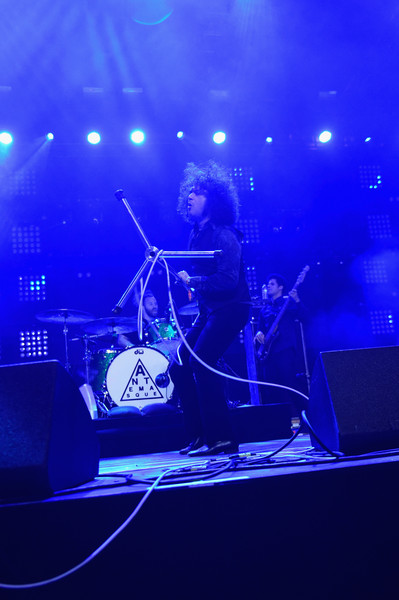
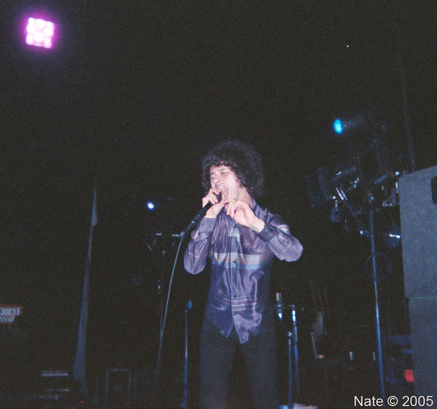
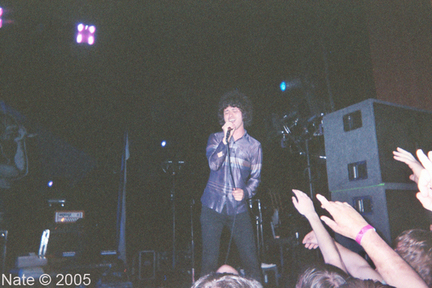
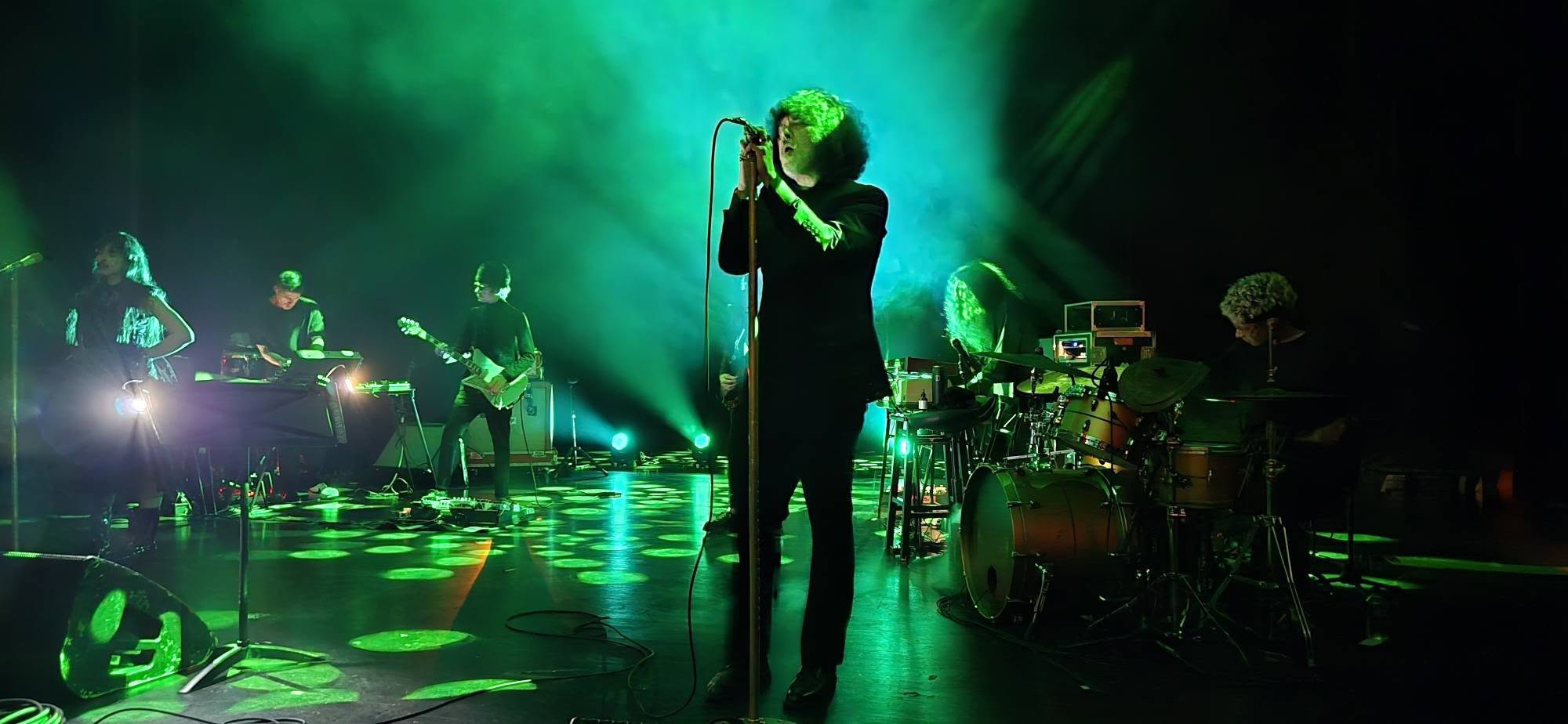
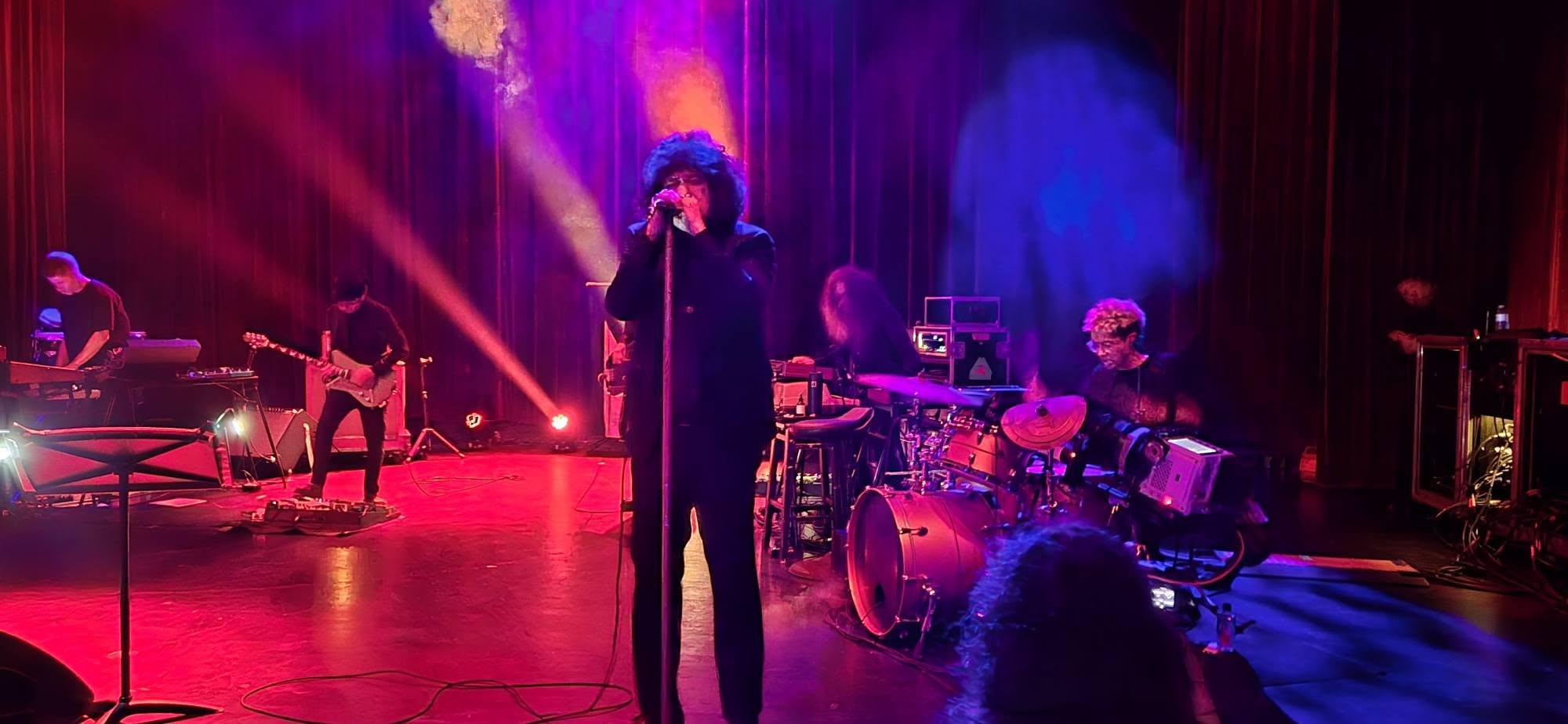
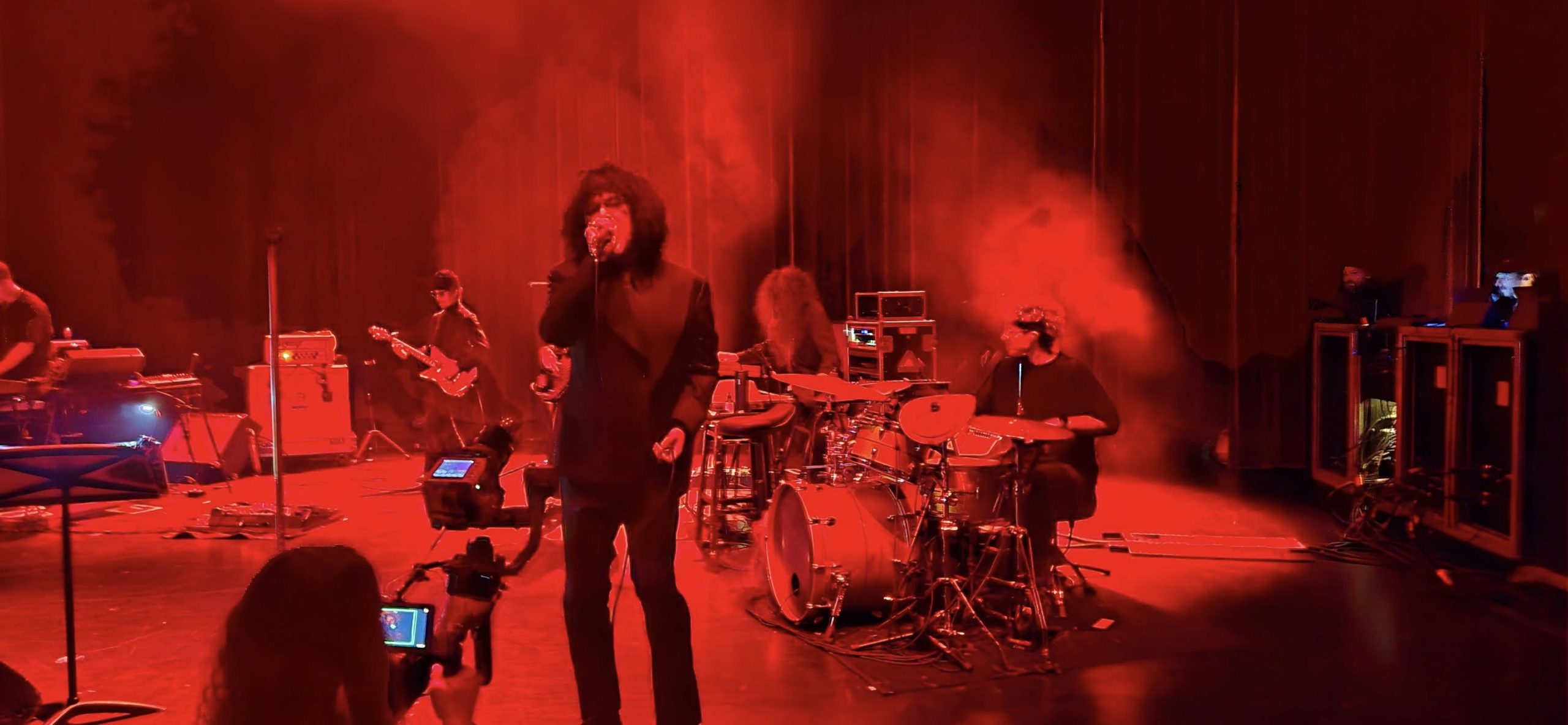
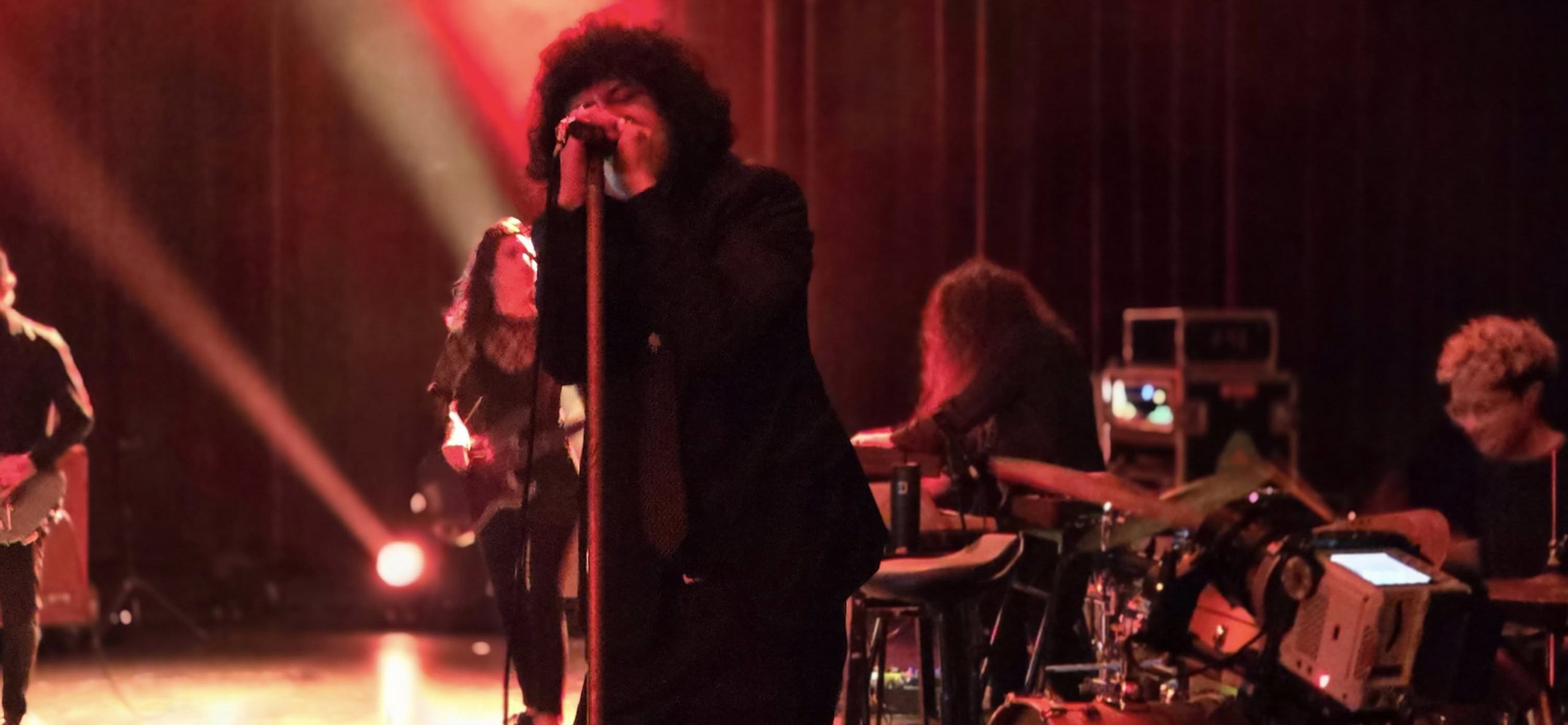
Commitment, for Cedric, is an understatement, as anyone who has seen him live can attest to. His performances are expressive and chaotic, full of avant-garde dancing vocal improvisations, and a willing to sacrifice his body for performance. The music possesses him and he becomes and a catalyst for it. One of the most common sentiments when seeing him live is that he alone is a whole performance onto itself.
There was one band, however, that stood the test of time, surviving while the others failed to thrive, At the Drive-In. Initially formed by him and fellow El Paso resident Jim Ward, the initial line-up was an emo/post-hardcore number that while young and unpolished had a small glimmer of hope for something bigger. Throughout the early and mid-90s those other bands would come and go, ultimately becoming curious footnotes in Cedric’s career and all the while At the Drive-In continued to survive. During this period Cedric would reconnect with friend Omar Rodriguez-Lopez who had left El Paso to hitchhike across America. Broke and sporting an opiate addiction, Cedric helped get his friend home, enrolling him as the band’s bass player and investing in their friendship. One could say this initial small gesture of kindness was one of the most critical moments of his life. The early shows were poorly attended, and concert goers, often eager to see the headliner, would mock Cedric and the rest of the band for their tight pants, less than macho presentation, and emotional musical output. Despite this, the band continued to push forward and survive, even when it didn’t such as during their brief initial break-up following the recording of Acrobatic Tenement, the band would continue to hobble along.
As has been documented a multitude of times, the bands endless push and struggle finally began to bear fruit in 2000 when their single One-Armed Scissor gained international attention, suddenly catapulting the band from underground darlings to playing festival mainstages. And while it is impossible to tell the story of Cedric Bixler-Zavala without telling some of the story of At the Drive-In, the greater importance here is acknowledging the combustible components all happening; the sudden fame, Cedric and Omar’s dissatisfaction with the band’s trajectory and their growing problematic use of drugs, and general wear and tear of relationships that comes with endless years crammed into vans and horrid sleeping conditions.
While At the Drive-In was eroding from the inside Cedric found himself more invested in his role behind the drum kit in the dub reggae outfit De Facto, featuring himself, musical brother Omar, longtime friend Jeremy Michael Ward, and recent musical compatriot Isaiah Ikey Owens. The lower stakes and calm psychedelic tones of De Facto provided a valued musical outlet as opposed to their exploding fame in At the Drive-In. As the story is known, At the Drive-In imploded in 2001, and with little fanfare Cedric, Omar, and Jeremy quickly moved onto future projects.
Cedric’s next musical venture, The Mars Volta, was a significant change for Cedric. Most of his earlier acts had him barking, shouting, screaming, or ambling along in something barely resembling in key. The Mars Volta allowed Cedric to expand his vocal range, trading in his tonal daggers for impactful, but deeply melodic singing. His lyrics remained metaphorical, more frequently dipping into cryptic and doused in flavors of science fiction, and the metaphysical. He also began inventing his own words, further adding to his tendency to build-worlds with his lyrics, even if that world was not always immediately understood.
The early years of The Mars Volta coincided with a reduction in his heavy drug use, inspired by Omar’s easing and Jeremy’s continued struggles with opioid misuse.
Appears on (121)
-
 Reina Tormenta / Enlazan Las Tinieblas [Single] Vocals, lyrics
 -
 Cue the Sun / Alba Del Orate [Single] Vocals, lyrics
 -
 Unfinished Business Lucro Sucio Lyrics, vocals
 -
 Lucro Sucio; Los Ojos Del Vacio Lyrics, vocals
 -
 Palm Full Of Crux (acoustic) [Single] Vocals, lyrics
 -
 Blank Condolences (acoustic) [Single] Vocals, lyrics
 -
-
 Vigil [Single] Vocals
 -
 Graveyard Love [Single] Vocals
 -
 Blacklight Shine [Single] Vocals
 -
 The Mars Volta Vocals
 -
-
-
 A Plague Upon Your Hissing Vocals
 -
 Eunuch Provocateur Vocals
 -
 II Drums (Track 6)
 -
 Call Broken Arrow [Promo] Vocals
 -
 Incurably Innocent [Promo] Vocals
 -
 Hostage Stamps [Promo] Vocals
 -
 In•ter a•li•a Vocals
 -
 Diamanté Vocals
 -
 Solid State Mercenaries Drums (8)
 -
 Light The Portals Drums
 -
 Governed By Contagions [Single] Lead vocals
 -
 Some Need It Lonely Voice (3)
 -
 El Bien y mal Nos Une Drums (5)
 -
- Saddle On The Atom Bomb [Unreleased] Vocals [Presumed]
-
 In The Lurch [Single] Vocals
 -
 Antemasque (Pre-Release) Vocals
 -
-
 Antemasque Vocals
 -
 Olompali Inspirational gratitude
 -
 One Armed Scissor (The Field Remix) Lead vocals
 -
 Infrared Moses b/w Anywhere Drums, percussion, electronics
 -
 Anywhere Drums, percussion, electronics, vocals, lyircs
 -
 Before Gardens After Gardens Drums, backing vocals
 -
 The Malkin Jewel [Single] Vocals
 -
 Noctourniquet Vocals
 -
 Pyramid Mirrors b/w Dead Golden West Drums, percussion, electronics
 -
-
 Is Anybody There? Vocals
 -
 Live At BBC: Live In London, UK, 2003 Vocals, lyrics
 -
 Select Tracks From ‘Octahedron’ Vocals, lyrics
 -
 Cotopaxi [Single] Vocals
 -
 Cryptomnesia Vocals
 -
 Octahedron Vocals, lyrics
 -
 Vicarious Atonement Vocals
 -
-
-
 Old Money Drums (2)
 -
 The Bedlam in Goliath Vocals
 -
 Коллекция Альбомов Vocals, lyrics
 -

-
 Goliath [Single] Vocals
 -
 Wax Simulacra [Single] Vocals
 -
-
 Calibration (Is Pushing Luck and Key Too Far) Vocals & lyrics (4, 10)
 -
 Se Dice Bisonte, No Bùfalo Vocals & lyrics (3, 5, 10)
 -
 The Catalyst Santa Cruz Vocals
 -
 Amputechture Vocals
 -
 Oh My God / L’Via L’Viaquez Vocals
 -
 The Widow [DVD] Vocals
 -
 El Bùfalo de la Noche Vocals, lyrics
 -
 Brussels, Belgium Vocals
 -
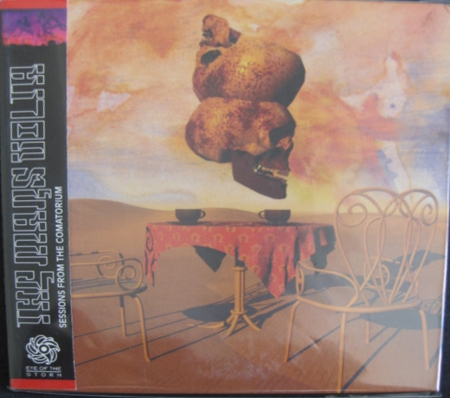
-
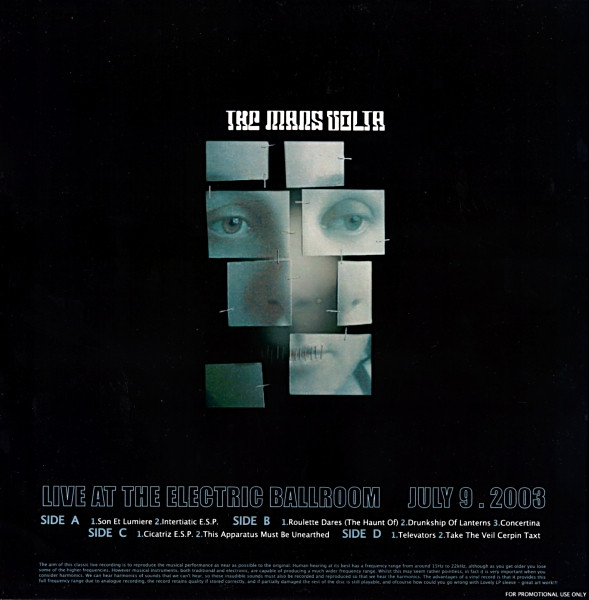
-
-
 Omar Rodriguez Tambora on track 4
 -
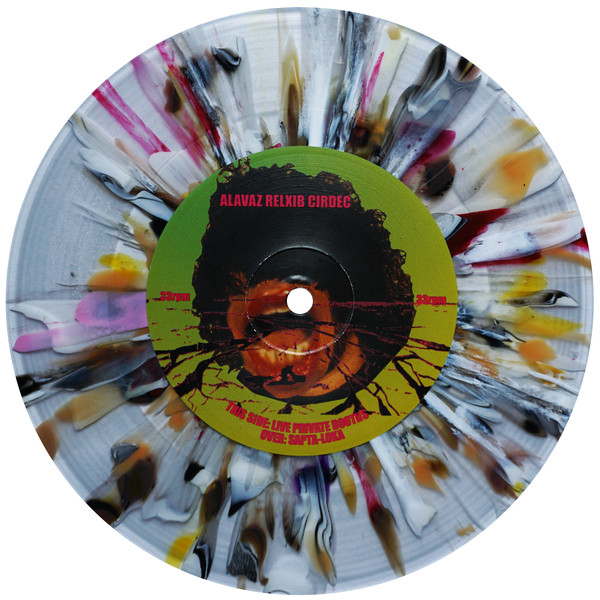
-
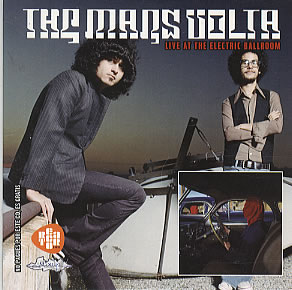
-
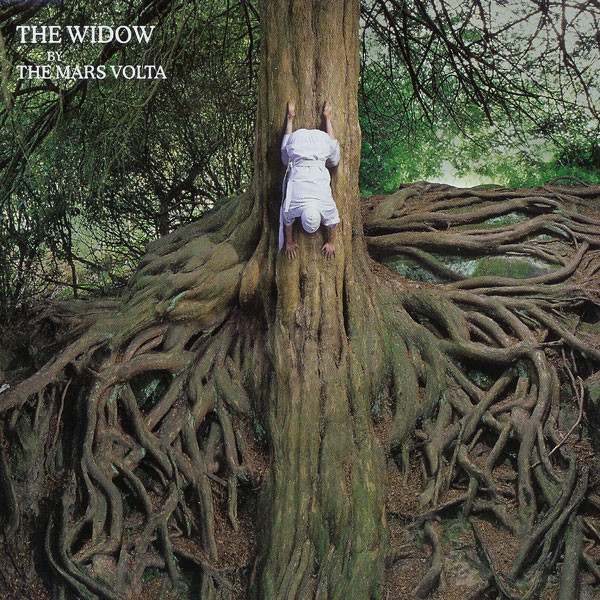 The Widow [Single] Vocals
 -
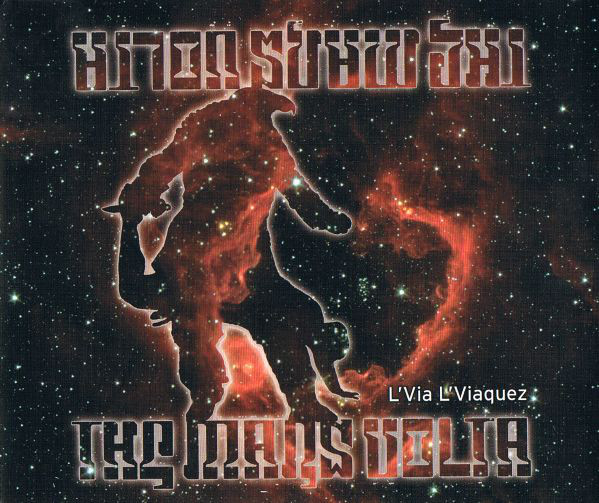 L’Via L’Viaquez [Single] Vocals
 -
 Viscera Eyes [Single] Vocals, tanpura
 -
 This Station Is Non-Operational Lead vocals
 -
 Frances The Mute [Single] Vocals
 -
 Scabdates Vocals, lyrics, art direction
 -
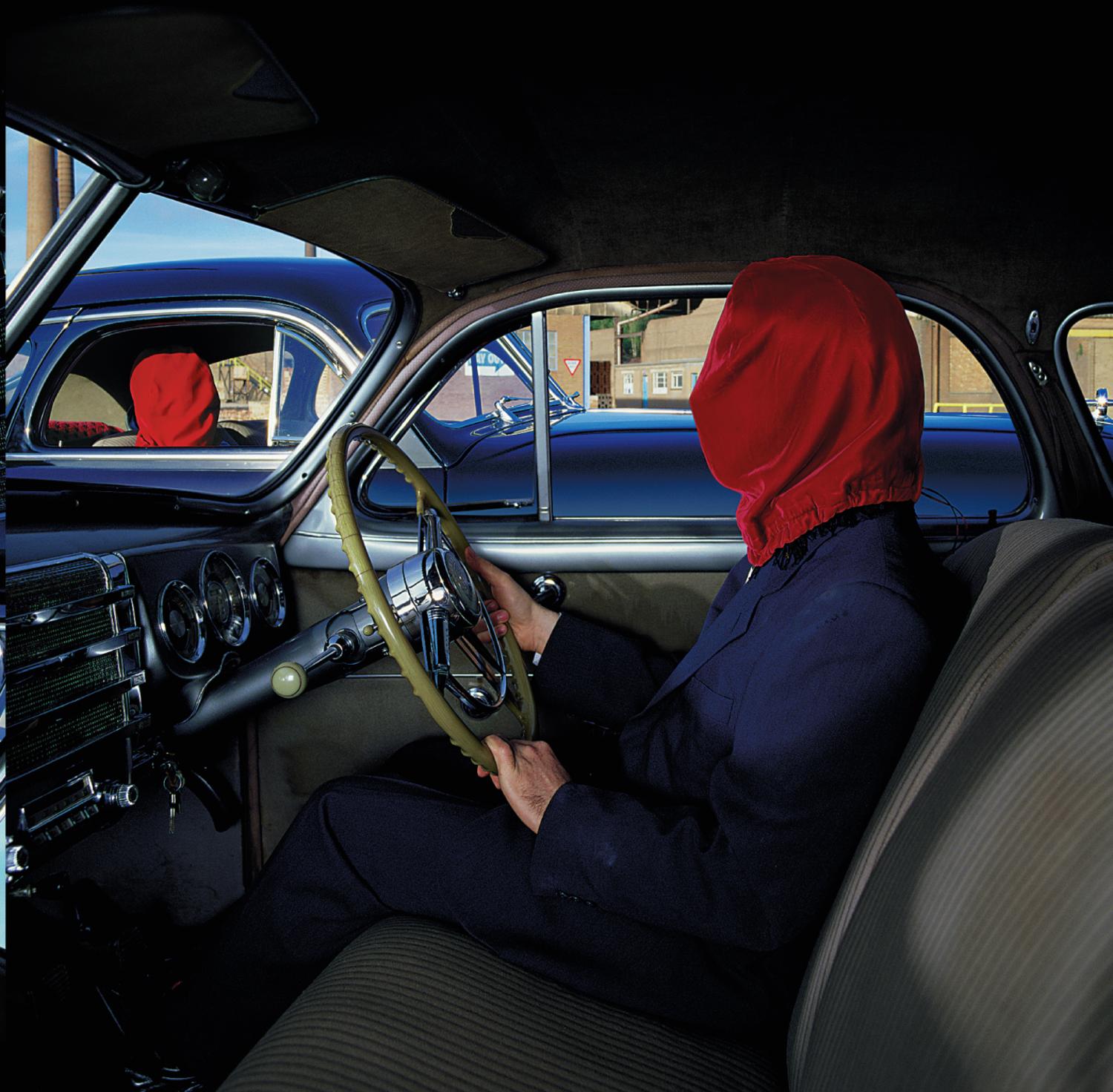 Frances The Mute Vocals, lyrics
 -
 Inertiatic ESP [Single] Vocals
 -
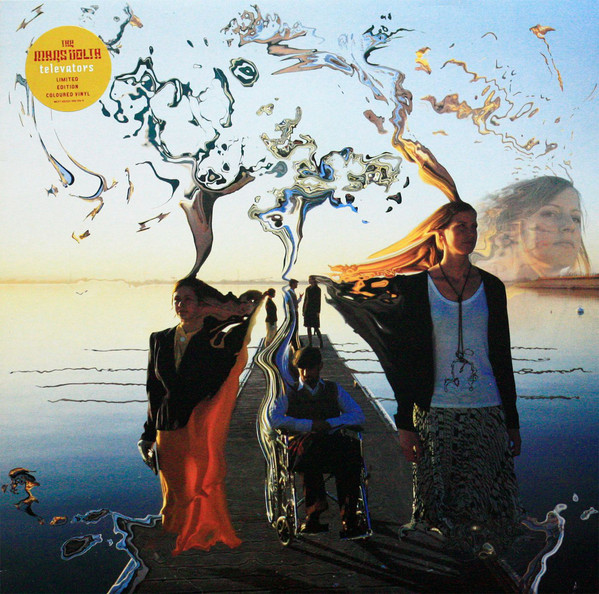 Televators [Single] Vocals
 -
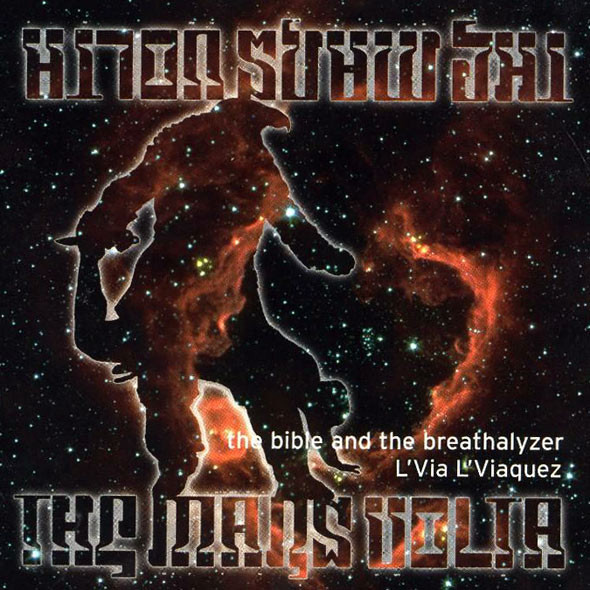
-
 A Manual Dexterity: Soundtrack Volume One Percussion & hand claps (2), vocals & lyrics (10)
 -
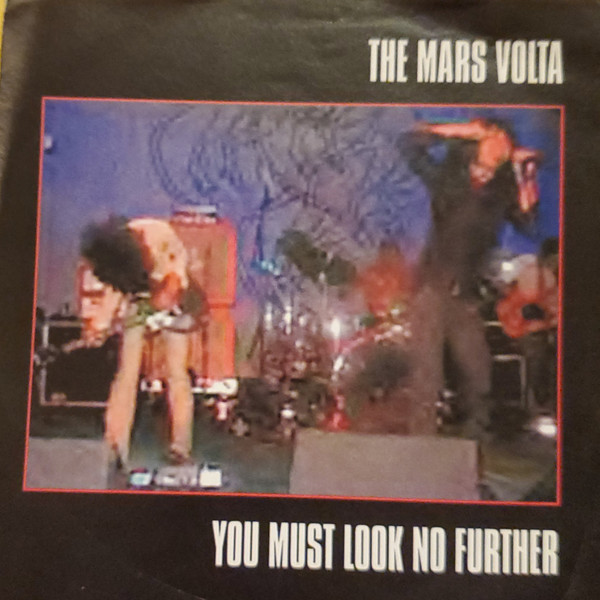 You Must look No Further Vocals
 -
 Live Vocals
 -
 De-Loused in the Comatorium Vocals
 -
 Untitled Vocals
 -
 The Summer Demo Sessions Vocals, lyrics
 -
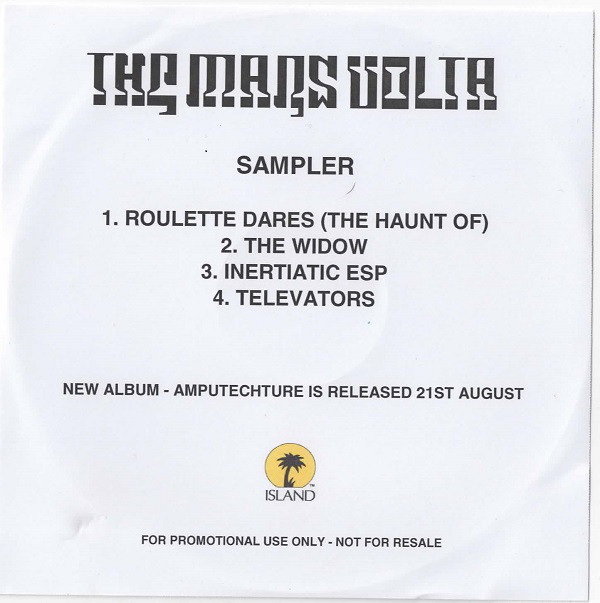 Sampler Vocals
 -
-
 Promo EP Vocals
 -
 Tremulant Vocals
 -
- (The Haunt Of) Roulette Dares / Cicatrix Vocals, lyrics
-
 Invalid Litter Dept. Lead vocals
 -
 How Do You Dub? You Fight for Dub. You Plug Dub In. Drums, keyboards, samples
 -
 456132015 Drums, Vocals (1,3), Percussion
 -
-
 ¡Megaton Shotblast! Drums
 -
 At The Drive-In / Burning Airlines Lead vocals,
 -
 Sunshine / At the Drive-In Lead vocals
 -
 Rascuache / Press Gang Vocals
 -
 Rolodex Propaganda Lead vocals
 -
 One Armed Scissor Vocals
 -
 Relationship of Command Vocals, guitar on "Rolodex Propaganda", melodica on "Enfilade", percussion
 -
 Rascuache / Chanbara Vocals
 -
-
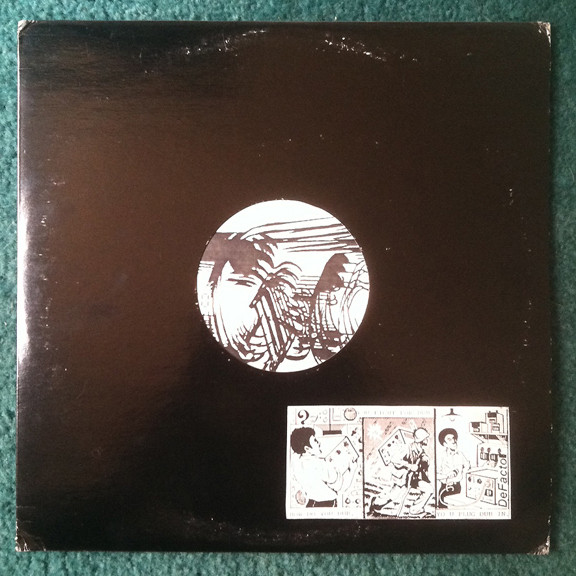 De Facto Drums, keyboards, samples
 -
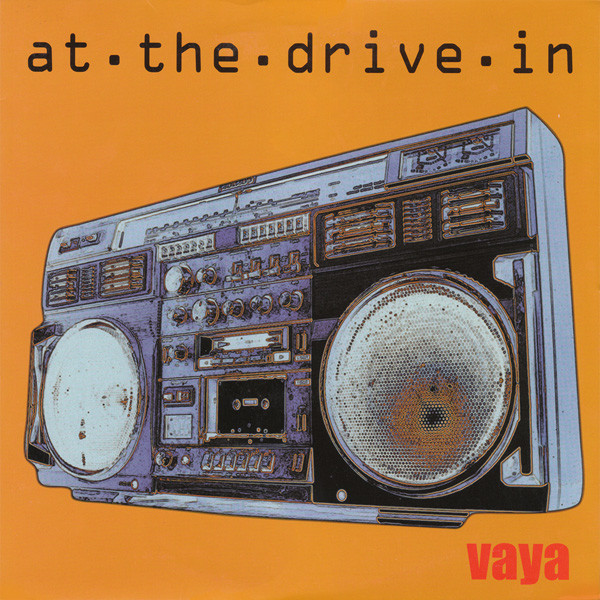 Vaya Vocals
 -
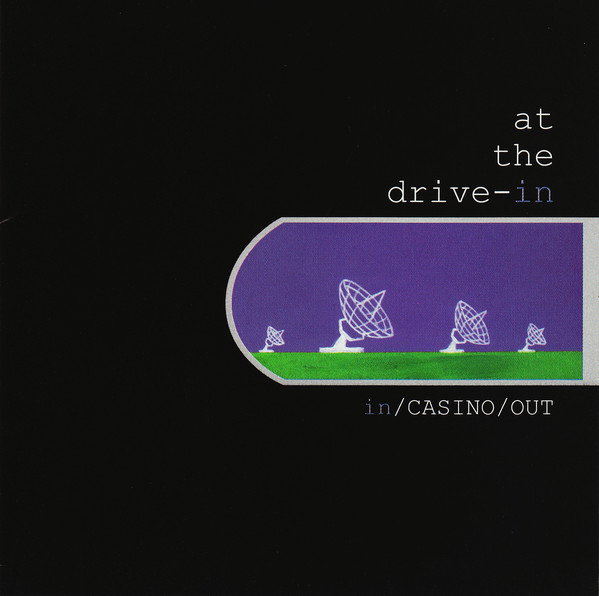 In/Casino/Out Vocals
 -
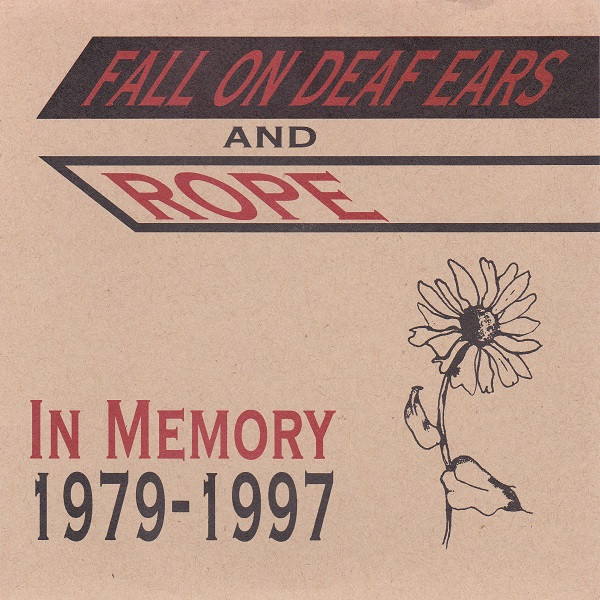 In Memory 1979 – 1997 Drums, vocals
 -
 El Gran Orgo Vocals
 -
 Acrobatic Tenement Vocals
 -
 The Fall on Deaf Ears Drums, vocals
 -
-
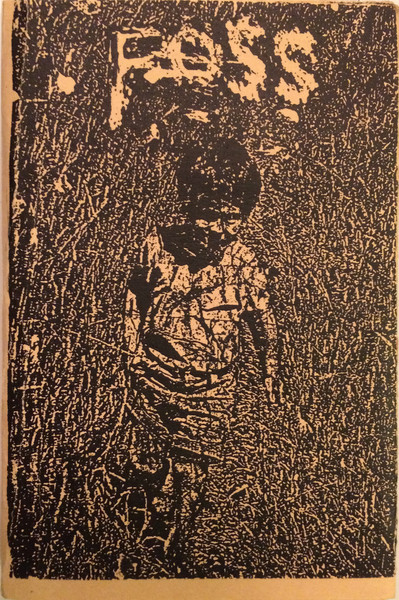 Fewel Street Drums, vocals
 -
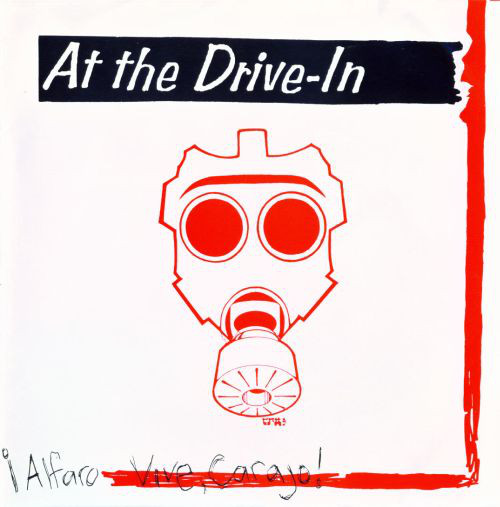 ¡Alfaro Vive, Carajo! Vocals
 -
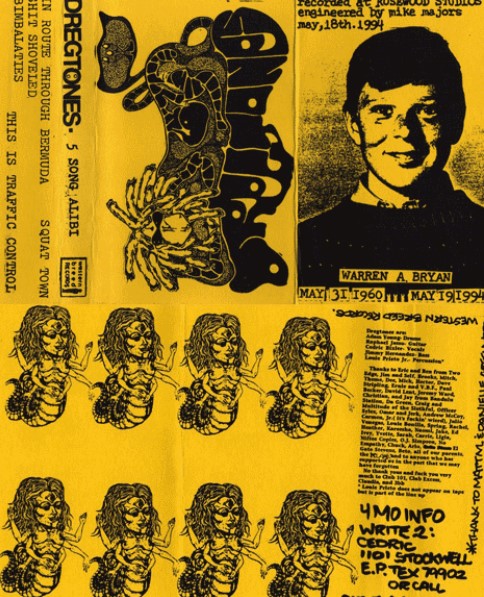 5 Song Alibi Vocals
 -
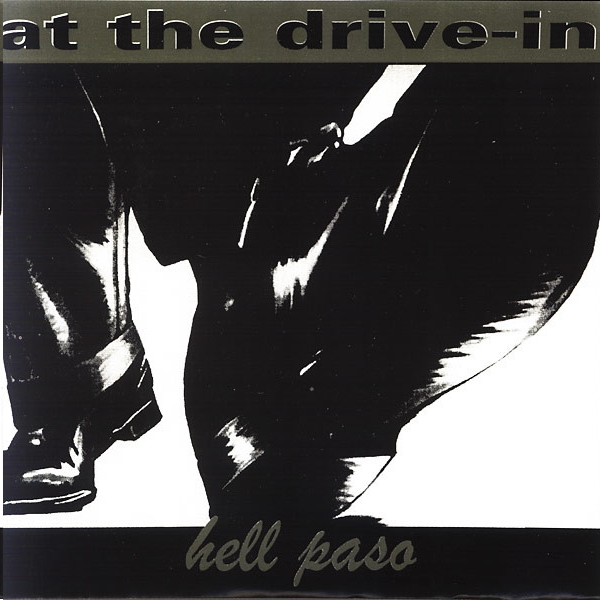 Hell Paso <p>Vocals</p>
 -
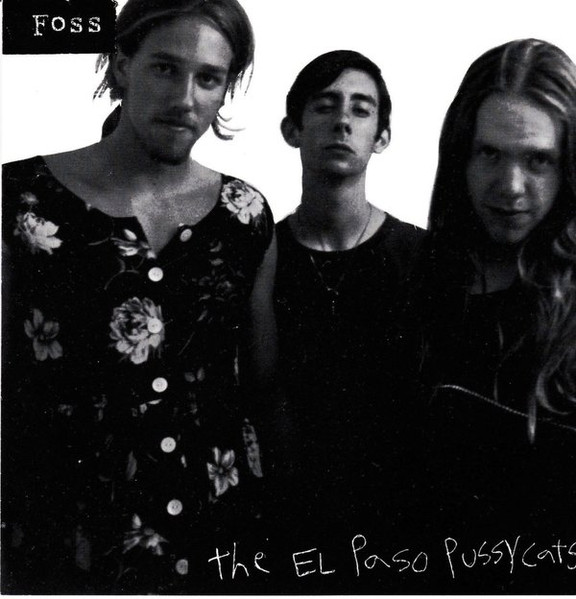 The El Paso Pussycats Drums, vocals
 -
 Foss Drums, vocals
 - All Those Nights We Never Met [Unreleased] Lead vocals, guitars
No albums match.
Gear
Microphone
- Audix om6
Dave Rat, founder of Rat Sound Systems and live sound engineer to the Red Hot Chili Peppers for 16 years, was approached by a roadie from The Mars Volta as they hit the west coast leg of their 2006 tour with a unique proposition: combine the hardware of the Audix om6 with the look and feel of a Sennheiser 421.
As Dave breaks down in his blog:
Check out the third revision of the Audix om6 inside of a Sennheiser 421 shell. And to start with we have a nice assortment of both old and new 421 parts:
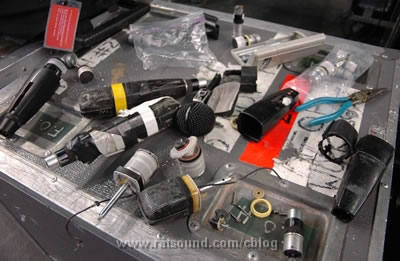
And by cutting the threaded ring off of the om6 grill and screwing it to the back of a 421 grill we get:
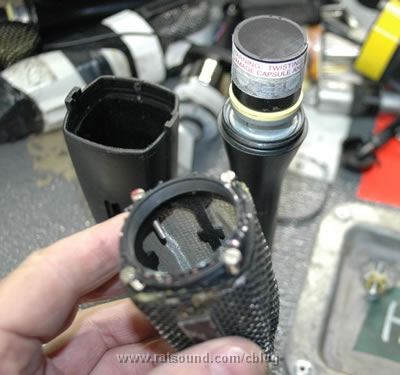
and the om6 can now be screwed into the 421 grill
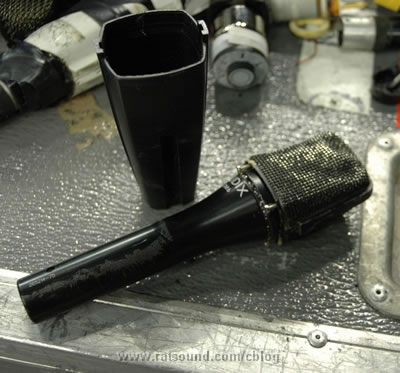
And after boring out the 421 shell with a Dremel tool so the Audix shaft slides inside:
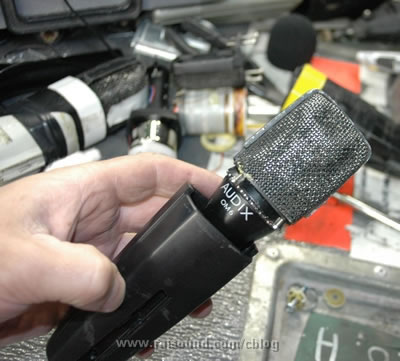
And we end up with what looks like a beat up old 421 but is actually a perfect condition Audix om6!
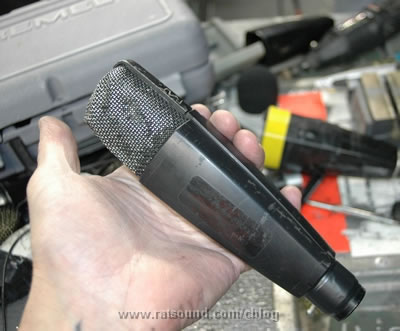
Now that was an adventure I really and truly enjoyed! Thank you roadie Shaun!
Guitar
- Gibson SG Junior
Used when playing Rolodex Propaganda
Drums / percussion
- LP Pro Maracas
Electronics
- Korg KP2 Kaoss Pad 2